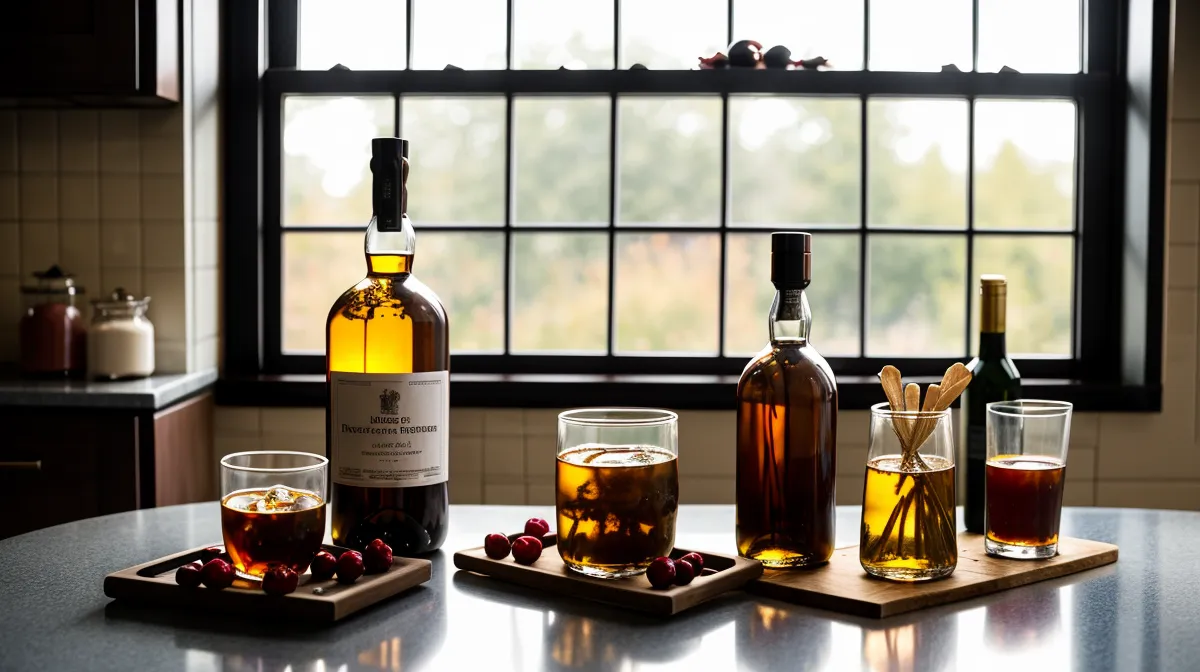
One evening late last November, my wife stopped mid-sentence while passing through the kitchen, her eyes fixing on the three-deep row of amber bottles crowding the breakfast bar. Outside, that heavy Ohio River fog was rolling in over downtown Louisville, turning the streetlights into blurry orange smudges, but inside, the light was hitting the glass just right to highlight exactly how much territory I had reclaimed from the toaster. It wasn't an ultimatum—we’ve been married too long for those—but the way she just stood there, looking at the 'distillery' that had slowly annexed our living space, spoke volumes. It was the look of someone wondering if we still lived in a house or if we’d moved into a shipping warehouse.
I’ve been keeping bourbons on that shelf over the kitchen pass-through since 2018. It started with one bottle of a 100-proof staple I liked for Friday nights, and for a long time, it stayed that way. But as I got more curious about what my neighbors were drinking and what my wife’s book club was bringing over, that single bottle started inviting friends. As a senior project manager, I’m usually the guy who can fit ten pounds of logistics into a five-pound bag, but even I had to admit that the structural integrity of a 1990s-era kitchen pass-through has its limits when you’re dealing with a growing fleet of 750 ml glass bottles.
The Logistics of the Growing Shelf
The problem with collecting anything, whether it’s wine or whiskey, is that the budget usually isn't the first thing to break—it’s the space. In my line of work, we call this 'scope creep.' You start with a clear objective (have a nice pour after a long shift) and end up with a logistical nightmare (where do I put the third backup bottle of that limited release?). By early this past February, I realized that my 'one bottle' rule from 2018 had been completely eroded. I was looking at a collection that occupied more square footage than our microwave.
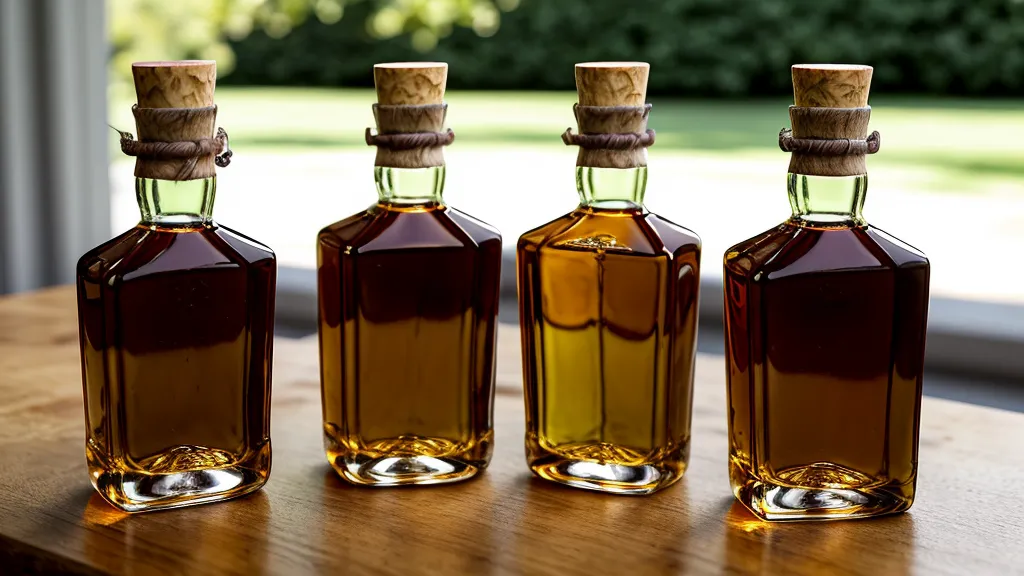
Part of the issue is the sheer physical presence of the stuff. According to TTB regulations, the standard spirit bottle volume in the U.S. is 750 ml, and while that doesn't sound like much, a dozen of them represent a significant amount of weight and clutter. I was treating my hobby like a scavenger hunt rather than a curated experience. I’d find myself at the store thinking, 'Well, this one is only about a steakhouse appetizer worth of money, I might as well try it.' Then I’d get home, realize I had no room, and shove it behind the bottles I actually liked. I’m not a professional distiller or a structural engineer, but I could tell that the 'budget-friendly' approach was actually costing me more in domestic harmony than the good stuff would have.
The scent hits me every time I walk through the door after a long shift—that faint, lingering aroma of vanilla and charred oak. It’s comforting, sure, but it also served as a reminder that I was essentially hoarding 'filler' bottles. I had this inner monologue running where I realized I'd much rather open a reliable mid-shelf bottle for my neighbor on a Tuesday than stare at a row of unopened 'unicorn' bottles I was too afraid to touch because they cost a tank of gas and were supposedly irreplaceable. That’s when I decided to apply a little project management to my kitchen counter.
The 'One In, One Out' Policy and the Premium Pivot
To keep the peace, I introduced a system that sounds simple but requires more discipline than a January diet: the 'One In, One Out' policy. If a new bottle comes home, an old one has to be finished or given away. No exceptions. No 'just for now' storage in the pantry. This forced me to stop buying those $25 bottles just because they were there. I realized that five mediocre bottles take up five times the space of one truly excellent bottle, and they usually cost about the same in the long run. By shifting my budget away from the 'budget' section and toward fewer, more premium expressions, I actually saved money and cleared the clutter.
I also started what I call the 'Book Club Subsidy.' My wife’s book club is a serious operation, and they’ve introduced me to more wines than I ever thought I’d care about. Now, for every premium bourbon purchase I make, I contribute a matching amount to her high-end wine rotation. It’s about balance. If I’m going to have a 100-proof Bottled-in-Bond bourbon on the shelf—which, by the way, has to be the product of one distillation season by one distiller at one distillery to earn that label—then it’s only fair that she has a nice case of 12 bottles of something from a region she’s currently interested in. This keeps the hobby from feeling like a one-sided land grab.
I’m not a doctor or any kind of health professional, so please talk to your own doctor if you’re concerned about how much you’re keeping on your own shelf. I just know that for me, the stress of a cluttered house was worse than the cost of a better bottle. I’ve had my share of misses, too. I remember a gift-basket Malbec a coworker gave me that sat on the shelf for months. It tasted like someone had dissolved a handful of purple markers in a glass of water. Eventually, I realized that keeping a bottle I didn’t enjoy just to 'get my money’s worth' was a waste of space. I eventually poured it out, and the relief was worth more than the liquid.
The Turning Point: Quality Over Volume
The real shift in my perspective happened mid-July during one of our Tuesday tasting nights. A neighbor of mine, who usually goes through the high-proof stuff with me, decided he was getting serious about cutting back. He brought over a can of Sober Carpenter, a non-alcoholic beer that actually tastes like someone put effort into it. Watching him enjoy that while we talked about work made me realize that the value of my shelf isn’t the total volume of alcohol I own. It’s the quality of the conversation it facilitates.
If you're looking for ways to share the hobby without overcomplicating your own kitchen, you might look into the Best Retirement Gift Baskets for Men Who Appreciate Good Wine as a way to see how others curate these things. I’ve learned that a well-chosen gift or a single, solid bottle is always better than a mountain of 'okay' options. I used to think I was being frugal by hunting for deals on the bottom shelf, but all I was doing was buying stuff I didn't actually want to drink. Now, I stick to the stuff that meets the real standards, like the 27 CFR § 5.22 requirement that bourbon must be aged in new, charred oak containers. If it’s not worth the space, it doesn’t get the spot.
One Saturday afternoon last month, I spent a few hours reorganizing. I cleared out the bottles that were just taking up space—the ones that were 'about a steakhouse appetizer' price but tasted like a regretful decision. I replaced them with a few reliable staples. It turns out, my wife doesn't mind the bourbon shelf nearly as much when it looks like a curated collection instead of a cry for help. The kitchen pass-through is back to being a place where we pass plates, and the bourbon sits there as a guest, not a permanent resident that’s stopped paying rent.
What I Actually Noticed
When I finally sat down to really look at what was left on the shelf, I realized I’d accidentally built a much better bar by trying to buy less. Here is what I noticed during the process:
- The air in the kitchen literally feels lighter when you aren't dodging thirty different 750 ml bottles just to reach the coffee maker.
- A 100-proof Bottled-in-Bond bourbon has a specific kind of 'punch' that I used to think I needed to find in rare bottles, but it’s actually available in the basics if you know what to look for.
- My wife is much more interested in trying a sip of something when she knows I didn't just buy it because it was on sale.
- I actually prefer the smell of the empty shelf (with just a hint of that oak) over the crowded mess it used to be.
I’ve learned that a curated shelf of 100-proof staples is better than a museum of dusty trophies. I still have no idea what a 'tannin' is officially supposed to taste like in a technical sense, but I know that a wine that makes your mouth feel like you’ve been chewing on a tea bag isn't something I want taking up room on my counter. My marriage is thriving because I finally started treating my hobby like a project manager would: with a clear budget, a defined scope, and a very strict policy on who gets to stay in the building. It’s your call how you manage your own space, but for me, less is definitely more—especially when 'less' means I can actually see the person on the other side of the pass-through.