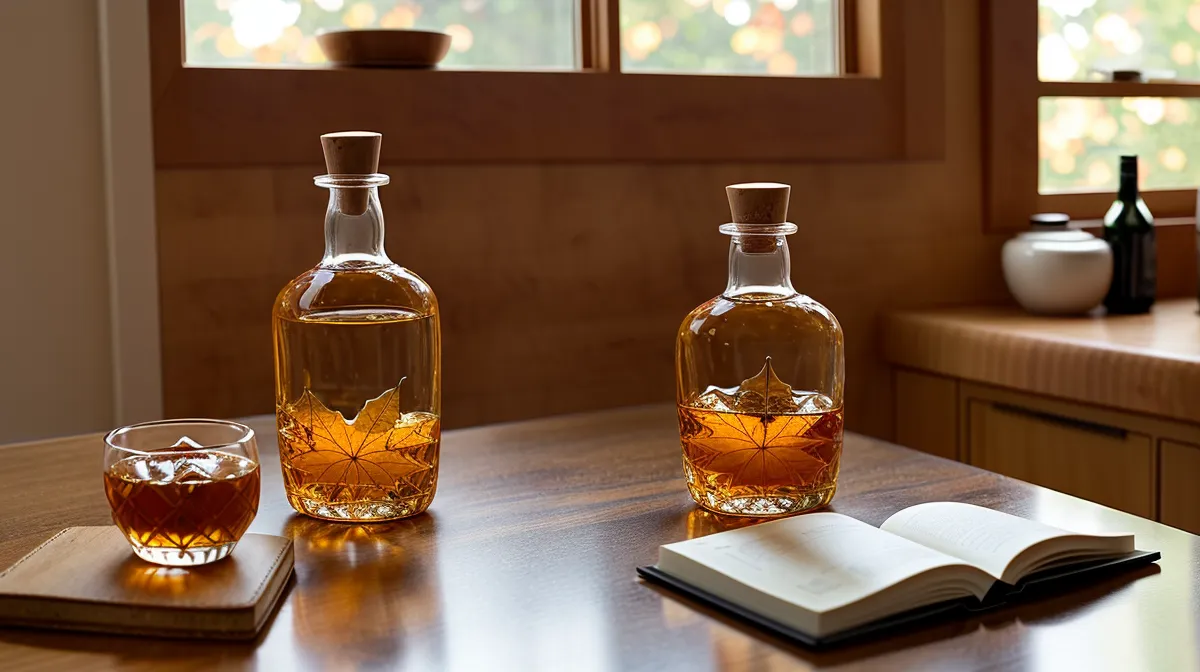
Fourteen bottles crowd the shelf over my kitchen pass-through right now, and if a first-timer asked me to close my eyes and grab one at random, I'd stop them before they touched it. Four of those fourteen are what I'd actually pour for someone who's never sipped bourbon neat before. The other ten are for people who've already been scorched by whiskey a few times and know what they're signing up for.
Before you get any further into this, a quick note: a handful of the shops I mention below — including the wine tasting calendars my wife's book club keeps steering me toward — pay me a small commission if you click through and buy something. It doesn't change what you pay, and it doesn't change what I say about a bottle after a Tuesday pour. I'm a logistics guy who happens to keep an overcrowded bourbon shelf, not a doctor, so treat this as one guy's notes rather than medical advice, and check your own state's shipping rules before you get attached to anything arriving on your porch.
Why Do Beginners Always End Up With the Same Bottle?
Even living in the middle of bourbon country, walking into a liquor store looking for a decent starter bottle is a coin flip. The shelves nearest the door are stacked with whatever the distributor pushed hardest that month, and the stuff that's actually aged enough to be gentle tends to sit further back where nobody's pointing you toward it. There's a legal definition of what gets to call itself Bourbon in the first place — mash bill, barrel, all of it — and I'll let that page make the case instead of me, because it's not the part that actually helps a beginner choose. That's a separate argument from bourbon versus rye, too, which I'll leave alone here.
Most people assume the safest beginner move is grabbing whatever's cheapest and lowest-proof on the shelf. That was my logic for longer than I want to admit. It's backwards. Cheap and young usually means thin, and thin means all you taste is the sting instead of the whiskey underneath it.
Mid-Shelf Bourbon Is Where the Value Actually Lives
Here's the case I make to anyone who asks, and it usually surprises them: skip both ends of the shelf. The bottom is young and harsh, and the allocated stuff at the top is priced like a night out, hard to find, and honestly wasted on a first pour anyway. Mid-shelf is the band in between: bottles that spent real time in the barrel, priced so a bad pick doesn't wreck your week, and sitting on the shelf in front of you instead of behind a waiting list. You're not chasing a name people fight over at a bottle share. You're looking for something with enough age on it to round out, at a price where trying three different bottles before you find a favorite doesn't feel reckless.
I keep a mason jar of water on the shelf for exactly this: a few drops in a glass turns a slightly-too-warm mid-shelf pour into something you can actually sit with, without watering it down into nothing the way it would with a bottom-shelf bottle. Gareth doesn't buy into that theory even when it's working right in front of him. I ran into him at Butchertown Market a few weekends back, and within about a minute he was giving me grief over what I'd paid for an allocated bottle; he cares more about whether something's actually good than whether it's hard to get, and he rolls his eyes at any price tag that's mostly paying for scarcity. He's not wrong often. I told Bourbon Concierge exactly that when I called them; I wanted something with enough backbone to take a few drops of water and hold together, not a bottle worth bragging about at a bottle share.
Finding the Kentucky Hug Without the Tears
The neighbor who nearly choked on his first pour didn't stay scared off. It took about six weeks of switching what I handed him — away from whatever was closest and toward the mid-shelf stuff with real age on it — before it started showing. I gave a bottle to my brother-in-law around that same stretch, picked for the exact reason Gareth would approve of, and he never sent a thank-you text. He just texted asking me to spell the name so he could order one for himself. That's a better compliment than a thank-you, honestly; he wasn't being polite, he wanted the actual bottle.
I still don't know what a tannin is supposed to taste like (my wife's book club has been dragging me toward milestone gifts lately and I'm picking up bits of wine vocabulary I never asked for), but I know what harsh feels like in bourbon. Harsh is a prickly heat that sits right on the tip of your tongue and doesn't move. A good beginner pour skips that prickle entirely and goes straight to a slow warmth that spreads through your chest instead. There's probably a whole conversation to have about how bourbon drinkers end up crossing over into wine, and the reverse, but that's a longer post than this one.
If you're just starting to build a shelf of your own, the order you set bottles out in for a first tasting matters more than people think — start soft, not with whatever's most interesting to you — and I've got more on that in the Practical Ideas for How to Organize a Home Bar for Beginners at Home piece. I keep the easy, welcoming bottles at the front of the pass-through where guests can reach them, and save the high-proof stuff further back for the Tuesday regulars who've already earned their calluses.
The Logistics Habit Doesn't Turn Off
Logistics is my actual job, so I can't help sizing up how a bottle gets from a distillery to my counter. Part of why I keep going back to Bourbon Concierge is that they're upfront about the allocation side of things; hunting down anything genuinely hard to find is its own separate skill, and they've clearly done the legwork so I don't have to. What ships and what doesn't still depends entirely on which state you're in, which is a headache no retailer fully smooths over no matter how good their checkout page looks.
Not everything earns a permanent spot on the shelf. A cabernet from a wine-club shipment sat on the laminate counter next to the fridge for most of a Tuesday without anyone finishing the glass; it had picked up a flat, warm-fruit note that made me wonder if it had spent a summer afternoon in a delivery truck, and by the time I noticed the condensation ring it had left on the counter, I'd already decided it wasn't staying. I passed it along to a coworker instead of pouring it out, which is basically where I draw the line these days; if I wouldn't serve it again on a Tuesday, it becomes somebody else's gift instead of my problem.
Fenton, who's been part of the Tuesday rotation for a few years now, started quietly asking me to keep something non-alcoholic on hand without ever making an announcement about it. Before we landed on Sober Carpenter, I tried a different non-alcoholic spirit that smelled like a hardware store shelf the second I cracked the cap; not something you serve a friend, let alone the guy who rates non-alcoholic pours harder than anyone else at the table. He rotates through a few different cans depending on the week, which tells me the category matters more to him than any single one does.
So Which Bottle Do You Actually Start With?
Decanting bourbon the way some people do with wine isn't something I bother with; that always struck me as a question with a different answer depending on what's in the glass, and it's not really mine to settle here. What I will say is this: stop shopping by proof number or by whatever's cheapest on the shelf, and start asking whether a bottle has enough time in the barrel to survive a few drops of water without falling apart. That's the actual filter. The label, the story, the price tag: that's noise you can sort out later once you've got a favorite.
If you want a place to start looking, the curated picks at Bourbon Concierge beat standing in a parking lot line at dawn hoping for a good allocation, and they're a lot more likely to land you something your neighbors actually finish instead of leave on the counter. And if you've got a Fenton in your own Tuesday group, keep something from Sober Carpenter in the fridge before he has to ask. Your shelf, your rules; I don't know what to tell you beyond that.