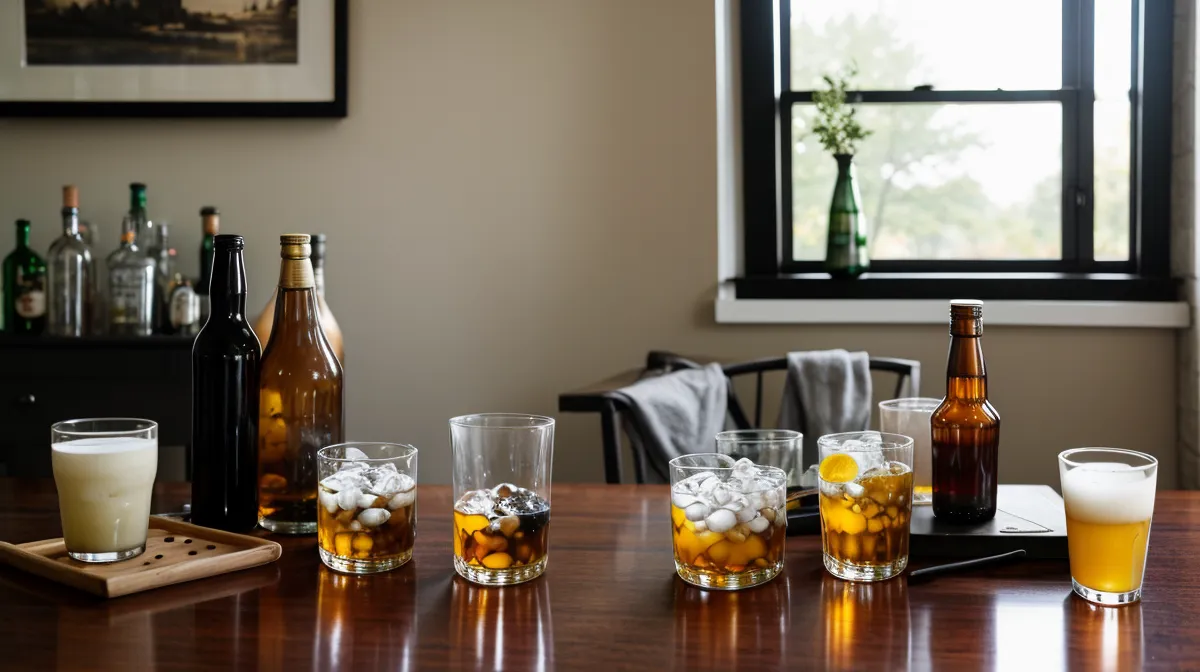
A bourbon bottle can stand upright on a shelf for years and barely notice. A wine bottle with a natural cork, stored the same way that long, is already halfway to ruined. That difference is the real starting point for organizing a home bar — most beginner advice treats every bottle the same, then wonders why the shelf turns into a mess of contradictions by spring. After eight years of watching bottles multiply across my own kitchen pass-through, I've landed on a storage system built around what each bottle actually needs, not how the row looks lined up.
How to Organize a Home Bar by Zone, Not by Furniture
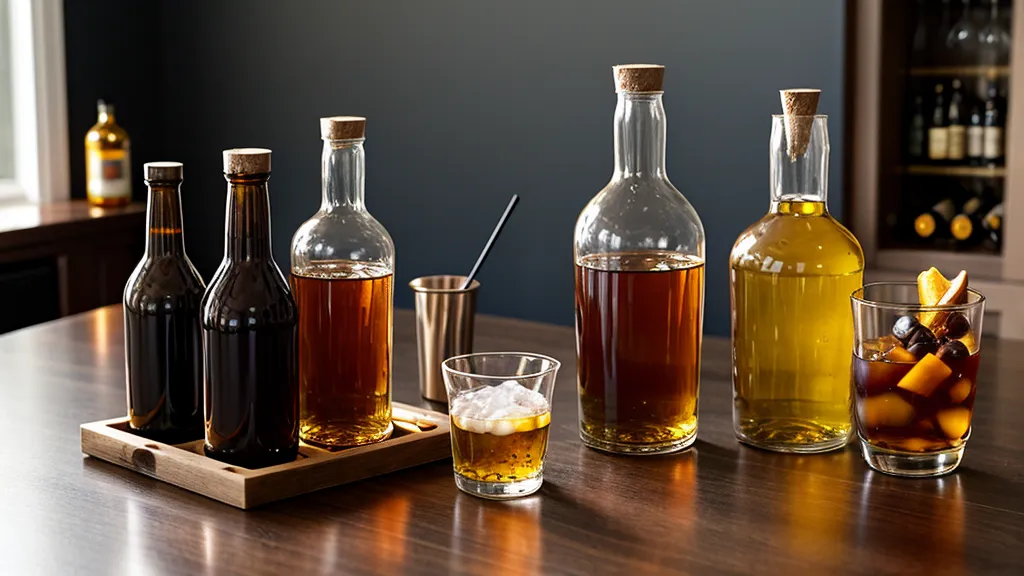
Most advice starts with furniture — a cart, a cabinet, a dedicated bar nook. Skip that. The better starting point is your busiest kitchen storage, because bottles that live where you actually cook get used, and bottles tucked into a dining room hutch just collect dust. I sort mine into zones instead: one zone for reliable, no-occasion bottles — mid-shelf bourbon and everyday reds — and a second zone for anything saved for company. Mid-shelf bourbon has its own value logic worth reading up on separately, but for shelf purposes it earns a spot by being good enough for a Tuesday, not by being impressive.
Zone two holds the bottles worth showing off, kept apart from anything used for cooking so a good bourbon never gets splashed into a pot of chili by mistake. That's also where a rye of mine sits — a different grain bill than the bourbon next to it, which matters more than the label suggests once you start sorting by category instead of just by name. If your collection is outgrowing two zones, it might be time to learn how to host a casual bourbon tasting for your neighbors instead of just storing everything indefinitely.
Why Vertical Space Solves What Cabinet Depth Can't
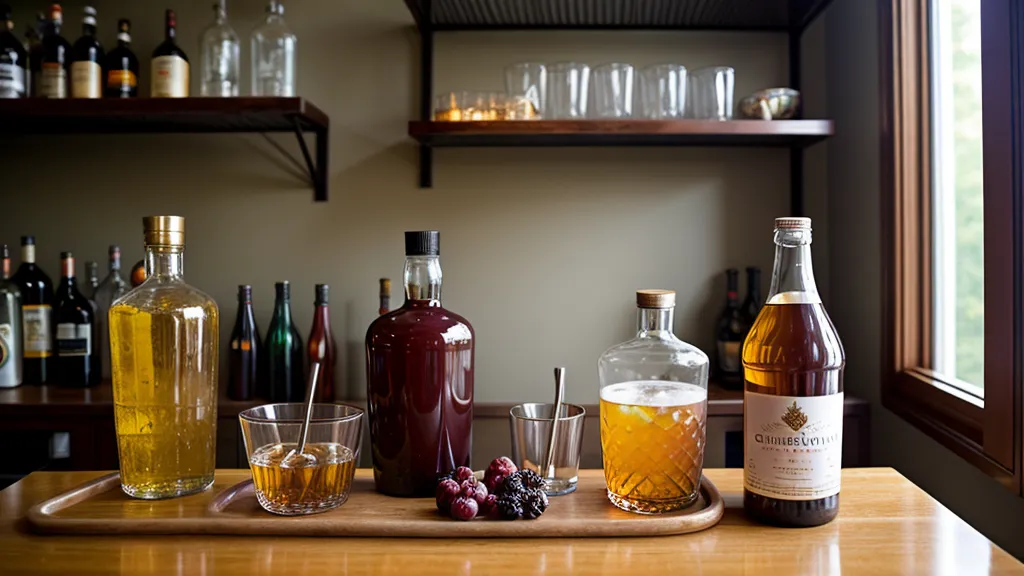
Cabinet depth is the enemy of a working shelf. Reaching over three short bottles to grab one tall one in back is how things get knocked over, and it also wastes money — you buy duplicates because you forgot what's already there. Tiered risers, the kind meant for spice jars, fix most of this with about ten minutes of setup. Once the back row is visible instead of guessed at, everything gets easier to find.
Vertical clearance matters just as much as vertical space. Leave real room above the tallest bottle — a couple of extra inches — because pour spouts and decorative stoppers add height that's easy to miss when you're eyeballing a shelf. Weight is the other thing people forget: a full fifth is heavier than it looks, and enough of them lined up will slowly pull a bracket mounted straight into drywall away from the wall. That's part of why I like risers I can move around instead of anything screwed in for good — the shelf can get reorganized without a drill.
Bourbon and Wine Don't Store the Same Way
Orientation is where bourbon and wine split. Bourbon is forgiving. It can stand upright for years without much fuss, direct sun aside. Wine with a natural cork is fussier. It does better lying on its side; a small habit, but one worth keeping. Whether a particular red needs to breathe before it's poured is a separate question with its own answer, and it has nothing to do with which way the bottle lies on a shelf. Tannin is its own subject too. Some reds from my wife's book club run drier and heavier than others, worth its own explanation somewhere else, but it doesn't change how the bottle gets stored.
Reading a wine label well enough to know what you're actually buying is a different skill from any of this, and I'm still building mine. A shelf question, though, is friends crossing over between categories. I've watched bourbon-first neighbors get curious about reds once the categories stop feeling like two separate hobbies with two separate rulebooks, and a good storage system doesn't care which direction the curiosity runs.
Keeping a Non-Alcoholic Rotation That Doesn't Go Flat
Non-alcoholic bottles follow none of bourbon's rules. They don't have the shelf life of something bottled at higher proof, so treating that section like a pantry staple is a mistake. Treat it more like produce. Buy what will actually get used in the next few weeks, and keep it toward the front where it won't get forgotten. I started stocking that zone after one of my regular Tuesday tasting partners got serious about cutting back, and it's become enough of a habit that I've caught myself reaching for the NA can before anyone at the table even asked what I was drinking. A low calorie non alcoholic IPA for craft beer drinkers who care is a decent one to keep in that front row — same rotation logic applies: first in, first gone, nothing sitting for months.
Closed Storage Beats Open Shelving for Beginners
A friend of mine builds custom cedar shelving in his garage on weekends and offered to build something similar for my kitchen. I turned it down. Open shelving looks great in photos, but it puts every bottle on display all the time, and staying organized partly means being able to close a door on what doesn't need looking at on a random Tuesday. Closed cabinets also hide the odds and ends — the bar spoon, spare corks, the shaker — that would otherwise clutter a nice-looking display. A lot of my actual tools came from unexpected places anyway; a vendor at the Germantown Saturday market sells small-batch bitters and mixers, and part of my tools shelf started as a folding-table purchase there instead of a store run.
When a Bottle Doesn't Earn Its Shelf Space
Not every bottle earns permanent shelf space. There's a real threshold where a bottle stops being worth the room it takes up. Once you can spot that line, the whole shelf gets easier to manage. A red that showed up in a gift basket after a co-worker's retirement party never made it past the first pour in this house. It wasn't a bad wine; it just wasn't one either of us reached for twice, so it went into the give-away stack instead of a zone. I also tried an app once that was supposed to help track and rate what I had. It kept scoring bottles that weren't available anywhere in Kentucky, which made it useless for anything beyond browsing. I deleted it inside a week and went back to just knowing my own shelf. Chasing something specific instead of managing what's already on hand changes the math. Getting access to allocated or hard-to-find bottles is its own process, worth reading up on separately. Shipping rules also differ enough state to state that they're worth checking before you get attached to a bottle you can't actually have sent to you. For the routine stuff, how to buy hard to find bourbon online without the local markup is a decent place to start once your zones are organized enough to know what you're actually missing.
None of this requires a weekend project or a furniture budget. Sort by how often a bottle gets reached for, keep the tall stuff visible instead of buried, store wine on its side and bourbon standing up, and let anything that doesn't get finished twice move off the shelf. That's the whole system. The rest is just figuring out which zones your own kitchen has room for.