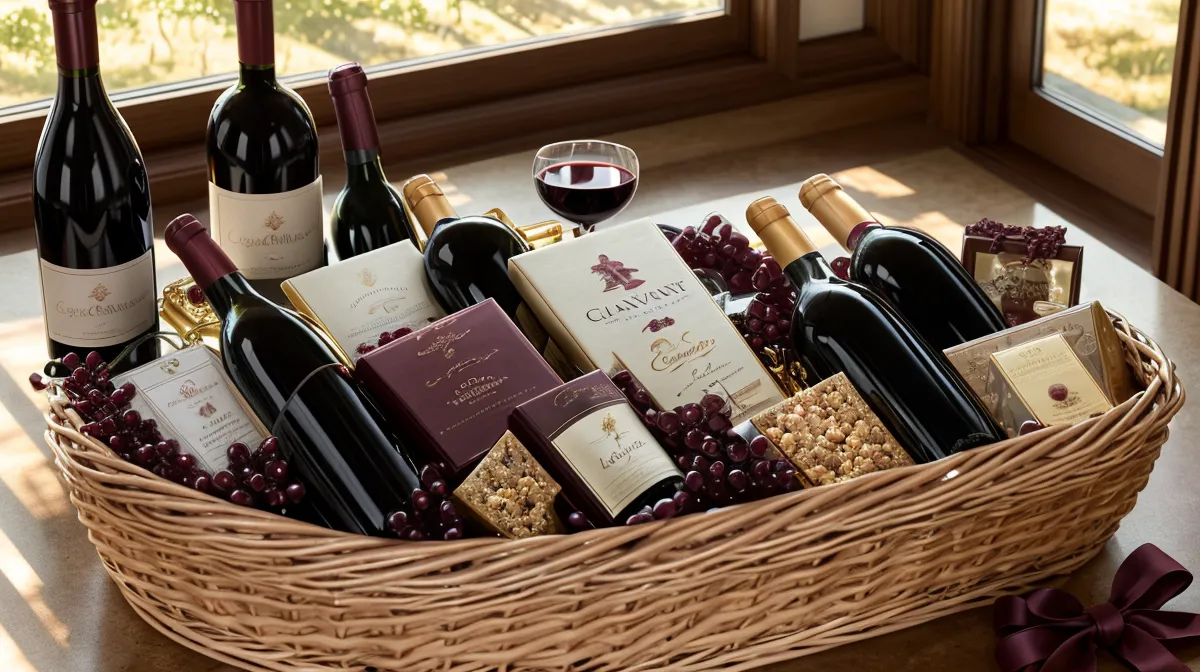
Which office birthday gift actually earns anything — the towering basket with the gold ribbon, or the plain bottle somebody picked because they actually knew what was inside? Corporate gifting has its own unwritten office etiquette, and I've watched both kinds land on the same breakroom counter enough times to have an opinion. The honest answer depends on things nobody thinks to check before they click order: how much lead time you've got, whether the recipient's state even allows the bottle to ship, and whether anyone's actually going to open it before the next birthday rolls around.
Full disclosure before we get into it: some of the links here, including the ones for Wine Country Gift Baskets and the rare-bottle shop I use called Bourbon Concierge, are affiliate links, and I get a small cut if you buy through them at no extra cost to you. None of that changes what actually gets finished in a breakroom versus what gets quietly walked to the recycling bin. I'm not a sommelier and I'm not a health professional, just someone who pays attention to a lot of birthday bottles, so check with your own doctor on the drinking part and your own state's rules on the shipping part.
None of this is really about the wine, or even about the bourbon on my own shelf at home. It's about logistics — a word that means something different at a regional freight company than it does behind a liquor counter, but the overlap is bigger than people expect. Corporate gifting runs on three questions: does it arrive on time, does it arrive intact, and does it arrive at all if the recipient lives somewhere with restrictions. Get those three right and the basket almost always beats the clever bottle, which is the whole quiet science of office etiquette nobody actually teaches you.
What's Actually Inside a Corporate Gift Basket
Pull the crinkle paper out of a basket from somewhere like Wine Country Gift Baskets and the wine at the center is rarely the point. You get crackers, something spreadable, a few chocolate squares, and a bottle chosen to offend absolutely nobody. That's not a knock. A gift-basket wine is built to be forgettable in the best way, closer to the corporate art in a conference room than to anything you'd bring up at happy hour.
The reliable ones lean toward a style people actually finish, mid-shelf reds and whites that skip the mouth-drying tannin some readers associate with a "serious" wine. I couldn't tell you the technical reason one wine does that and another doesn't. I just know a wine that makes my mouth feel like a dry wool blanket versus one that doesn't, and gift-basket wine almost always lands in the second category. The label usually gives it away before you even taste it, too — "smooth" or "easy-drinking" on the front is basket wine, guaranteed. That's the whole logic behind mid-shelf value: pick the bottle nobody has a strong opinion about, and it gets finished instead of re-gifted.
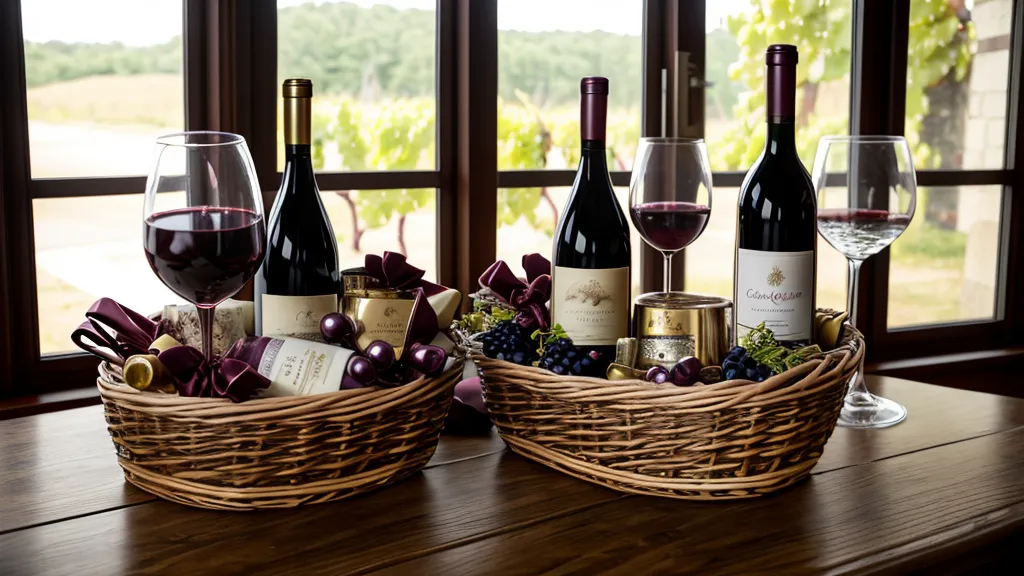
Compare that to what shows up when I order from Bourbon Concierge for something outside the office — allocated bottles a Louisville liquor store just doesn't carry. You can feel the difference in your hand before you even open it, real weight instead of the thin glass most basket bottles ship in. That's the tradeoff: a concierge bottle is a reward, a basket is a gesture, and an office birthday almost always calls for the gesture, not the reward.
Reading the Shipping Rules Before You Click Order
The actual value in a service like Wine Country Gift Baskets isn't the bottle at all — it's that the box shows up looking like the listing photo, on time, to an address that might reject the shipment for reasons that have nothing to do with the sender. I've shipped bourbon across the country myself, badly, with too much bubble wrap and not enough planning, and a service that has the packaging and the state-by-state rules memorized is worth more than it looks like on the invoice.
State shipping restrictions are the other half of this. A basket or a bottle can get swapped for a non-alcohol version at checkout, or blocked outright, depending on where the recipient lives. Custom-label orders make the lead-time math worse: a hand-painted bottle from somewhere like Mano's Wine needs roughly a four-week runway, which rules it out the moment a birthday shows up with a week's notice. You're paying about a tank of gas's worth of premium for a basket over a bare bottle, and most of that premium is buying you the part where you don't have to think about any of this.
The Mini-Bottle Sampler Solves a Different Problem
For a smaller team milestone, a sampler like In Good Taste Wines handles something a full basket can't. It's a box of two dozen mini bottles from a handful of regions, closer to sampling a flight at one of the bars along the NuLu strip off East Market than committing a whole office to one bottle nobody asked for. People get to try something outside their usual lane without anyone feeling obligated to finish it. The per-ounce cost runs steeper than a regular case once you know what you actually like, so it works better as a discovery tool than as a repeat order.
Not Everyone at the Party Is Drinking
Not everyone at an office thing is drinking anymore, and plenty of them would rather not make an announcement about it. That's the actual case for keeping something like Sober Carpenter in rotation — their Irish Red passed a real test at a Tuesday tasting when a neighbor who only drinks light lager finished the can and asked if it was the real thing. The process uses vacuum distillation to pull the alcohol out; I won't pretend to know the mechanics past that, only that the flavor survives it better than most of what I've tried in the category.
I wrote up a longer, full review of Sober Carpenter after running it as my Tuesday pour for a while, if you want the deeper comparison against the beer it's standing in for. For an office setting, the short version holds: it's the one non-alcoholic option that doesn't make the person drinking it explain themselves.
My neighbor Noreen, who's a big part of why wine ended up on my shelf at all, is a decent barometer for any of this. When the Tuesday group votes to reorder a bottle without anyone asking what it cost first, that's the tell that it actually worked. Nobody does that for something they were lukewarm on.
Match the Gift to the Occasion
Sybil, a neighbor a few blocks over, texts before every dinner party wanting to know exactly one thing: is this safe to hand somebody as a gift, full stop, before she even asks whether it's good. That's the real filter for an office bottle too. Safe beats interesting almost every time.
A label doesn't always tell the truth about what happens after the cork comes out. I brought in a bottle marketed as "approachable" once, banking on the word to do the work for me, and it sat on the counter untouched after the first Tuesday pour. Nobody trusted the label enough for a second glass. Label language only gets you so far — the bottle still has to earn the second pour.
If the recipient is someone who actually knows what they're drinking, a real taster rather than someone who'll say thanks either way, the basket is going to fall flat. That's when Bourbon Concierge earns its keep, because a bottle with an actual story behind it clears what I think of as the re-gift threshold: good enough that it doesn't quietly end up back in circulation at the next white elephant.
For the standard office birthday, though, the ordinary cake-in-the-breakroom kind, Wine Country Gift Baskets is still the practical answer. It solves the actual problem, which isn't finding great wine, it's not being the person who forgot the ribbon or showed up with a bottle that leaked in the car. A reliable mid-shelf label in a basket that looks expensive is worth more in an office than a better bottle nobody has time to appreciate at their desk. It runs about a steakhouse appetizer's worth of extra cost over a bare bottle, and that's the price of not being the awkward gift.
Something with more weight behind it, a retirement or a big anniversary on the team, calls for Mano's Wine instead, assuming there's enough runway to let the custom label actually get made. An officially licensed team logo or a photo upload turns it into a keepsake instead of a consumable, which is a different job than the basket is doing.
Pick based on the lead time and the recipient, not on whichever option feels most impressive to order. And whatever you land on, it doesn't hurt to keep a few cans of Sober Carpenter in the breakroom fridge for the people who'd rather skip the toast — safe, easy, and one less thing to plan around. Check your own state's shipping rules before you hit order either way. I don't know what to tell you beyond that; every office is different, and this part's your call.
Wine Country Gift Baskets
Pros
- + Arrives looking exactly like the professional photos
- + Wide price ladder fits any office budget
- + Customer service handles shipping headaches reliably
Cons
- − Significant portion of price goes to packaging and snacks
- − Wine selection is safe but rarely exciting