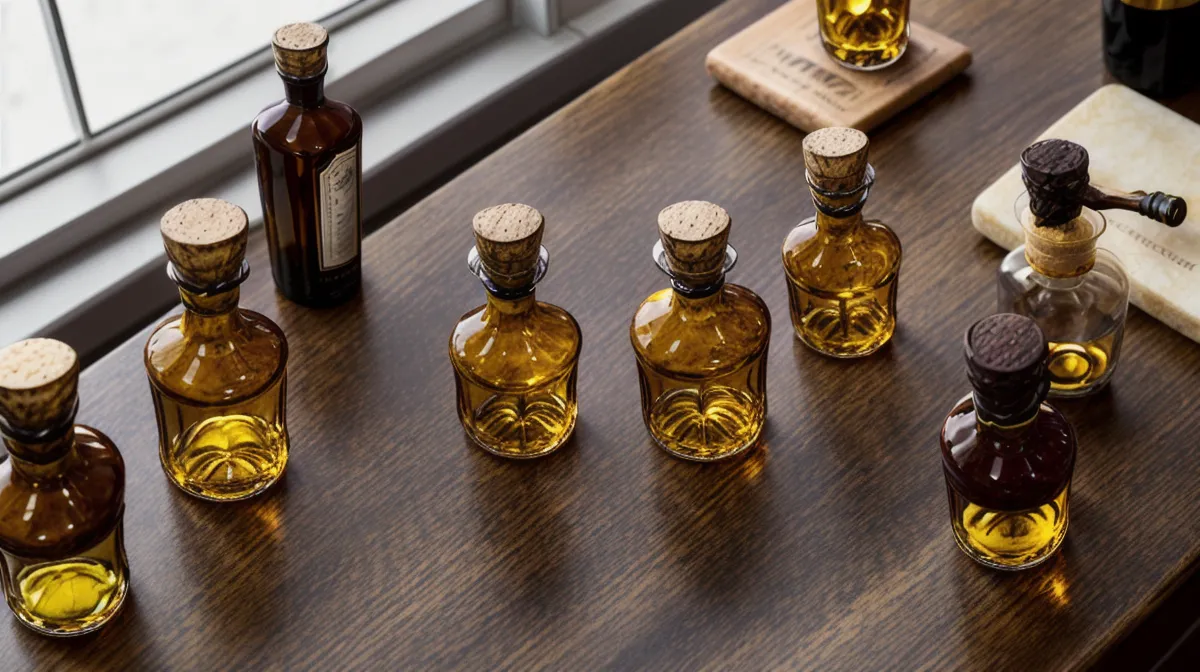
A 187-milliliter split is the whole idea behind wine sampling in one bottle: one full pour, a short top-off, and nothing left over to feel guilty about the next morning.
The going wisdom around wine clubs is that a full-size bottle is the smarter buy: more liquid, lower price per ounce, no premium paid just to try something new. After eight years of running a kitchen shelf that started with three bottles of bourbon and now argues over space with fourteen, I think that math only holds up once you already know what you like. The rare rye I picked up through Bourbon Concierge already claims real estate on that shelf, and every wine bottle that doesn't get finished is squeezing an arrangement I care about more than any subscription box.
The Math Bourbon Drinkers Get Backwards on Wine Sampling
That's what pushed me toward In Good Taste's twenty-four-bottle calendar instead of signing up for another case-a-month club. Twenty-four mini bottles from different regions land in one box, and each one is an actual glass bottle, not the sad plastic sample cup some grocery stores hand out at a tasting counter.
Gareth, a guy I know through work who's turned into a regular at our Tuesday tasting, took one look at the per-ounce price and called it a markup dressed up as an experience. He's skeptical of anything that charges extra for the story attached to a bottle, and he's usually right to be skeptical. But per-ounce isn't the number that matters here. For someone already pouring barrel proof bourbon by the half-ounce, a 187ml split isn't a strange unit, it's the same restraint applied to a different bottle. The crossover runs both directions, too: the oaked Chardonnay in one box tasted close enough to a well-aged wheater that it stopped feeling like a foreign language.
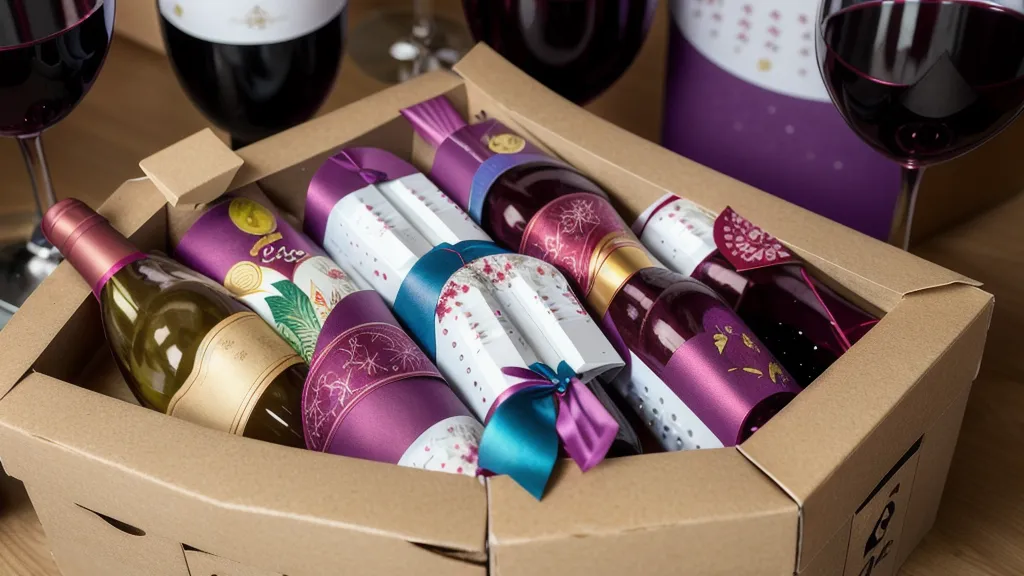
Coworkers still show up with Wine Country Gift Baskets when someone gets a promotion, and those are fine for what they are — a nice bottle wrapped for a desk, not a tool for building out an at-home tasting habit. Different job, different bet.
Twenty-Four Small Bottles, One Real Lesson
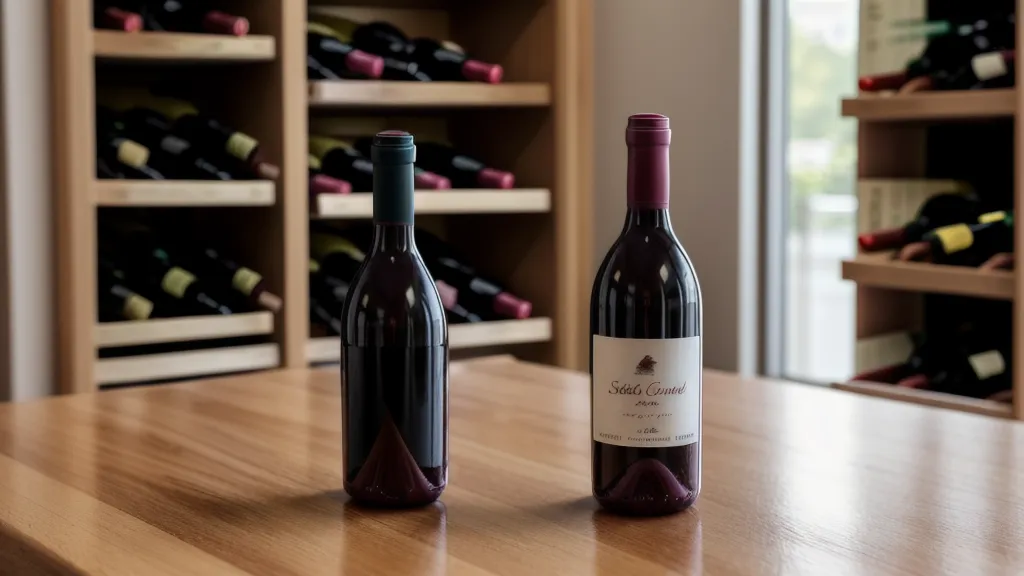
Pull open one of the two dozen little doors and you get an actual glass bottle, not a sample cup, and the tasting block-8137c7 that comes with it skips the vocabulary that makes a beginner feel dumb. Tilt one of those minis under the pendant light over the kitchen island and the foil at the neck throws a quick bronze flash before you've even read the label — small thing, but it's the kind of detail that makes twenty-four random regions feel less like homework. I still couldn't tell you the official order a proper flight is supposed to run in, but I've learned to go lightest to heaviest and save anything red for last, which keeps one wine from stomping on the next. Reading the actual label, front and back, turned out to matter more than any tasting block-8137c7 — country, grape, sometimes a vintage, and that's usually enough to place a bottle the next time you see it on a shelf. One split from Butchertown Market followed me the whole drive home; I kept circling back to how it finished, something a full bottle never manages after just one glass.
Why a Full-Case Club Trips Up a New Palate
The real cost of a full-size club isn't the price tag, it's the sink. Open a 750ml bottle of Malbec that turns out too heavy for you and you're looking at twenty-five ounces you either force down over a week or pour out — real money, roughly a tank of gas by the time that's happened three or four times chasing a producer you don't actually like yet. A calendar swaps that risk for two dozen chances to be wrong at six ounces each, which is closer to buying data than buying wine. It's not a full substitute for a proper club once you already know your lane, either — mid-shelf bottles you already trust are still the better buy per pour once the guessing stops, and if you're chasing something a Louisville liquor store just won't stock, that's a different problem than a calendar solves; a concierge service that tracks down allocated bottles earns its cut somewhere else entirely. Shipping rules for wine shift state to state, too, and can quietly swap what's sitting in your cart at checkout, so that's worth confirming before you get attached to a specific case. We usually open a Tuesday tasting with a few In Good Taste minis to see if anything's worth ordering a full case of down the road.
Does a Non-Alcoholic Pour Wreck an At-Home Tasting Night?
Fenton's been part of the Tuesday rotation for a while now, and at some point he started asking me to keep something non-alcoholic in the fridge without ever making a big announcement about it — I just started buying two of everything. The first non-alcoholic spirit I picked up to cover that base smelled like a hardware store shelf, sharp and chemical, and it went down the drain after one pour. Sober Carpenter was the one that actually stuck, and Fenton is the toughest judge at the table for it — he rates non-alcoholic options harder than anyone else in the group, so when he doesn't push his glass aside, that's the real verdict, not anything printed on the can. Rotating a non-alcoholic pour into a night that's mostly wine and bourbon sounds like it should throw the whole evening off, but keeping the wine pours small is what actually makes it work — nobody's palate gets tired enough to notice the switch.
The Big Gesture vs. the Discovery Box
There was a custom-labeled bottle from Mano's Wine I picked up as a retirement gift for a neighbor — hand-etched, genuinely impressive to look at, the kind of thing that gets photographed before anyone drinks it. The wine inside was just fine, nothing wrong with it and nothing memorable either, which is the trade you're making: the label is the headliner and the wine is whoever opened for them. That's a fair deal for a retirement gift or a wedding favor. It's a bad deal if what you actually want is to learn something about what's in the glass. A 187ml split never needs decanting — there isn't enough volume for it to matter — but a full bottle with real tannin structure, something dense enough to feel a little rough straight from the cork, is exactly the case where that decision actually earns its keep.
Keep the One Rule That Matters
Gareth still thinks I overpaid for the privilege of being wrong twenty-four times. He might be right about the price. He's wrong about the value, because the expensive thing was never the calendar — it's a full bottle you didn't want in the first place, sitting on a shelf that only has so much room. The rule I'd actually give you: don't buy the full-size bottle until you've already met it in a smaller pour. That holds whether it's a case of wine or a bottle of something I care about even more, since I'd argue how long bourbon lasts after opening matters more to my shelf than which Bordeaux vintage is supposedly peaking this year. The wine up there now actually earns its spot; I'm not stockpiling maybes anymore, every bottle already passed a smaller test first. If your shelf is doing the same thing mine was a year ago, grab the small pours before you commit to the case — your future shelf space will thank you.
| Product | Rating | |
|---|---|---|
| In Good Taste Wines Top Pick for Discovery | 9.1 | Read More → |
| Bourbon Concierge | 8.9 | Read More → |
| Sober Carpenter | 8.5 | Read More → |
| Wine Country Gift Baskets | 8.0 | Read More → |
| Mano's Wine | 7.8 | Read More → |
In Good Taste Wines
Pros
- + 24 different regions in one box means zero boredom
- + 187ml bottles are the perfect 'no-waste' tasting size
- + Tasting cards use plain English instead of wine-snob jargon
- + High-quality glass bottles feel much better than plastic splits
Cons
- − Higher cost per ounce than buying bulk cases
- − Favorite bottles from the set can be hard to find individually later