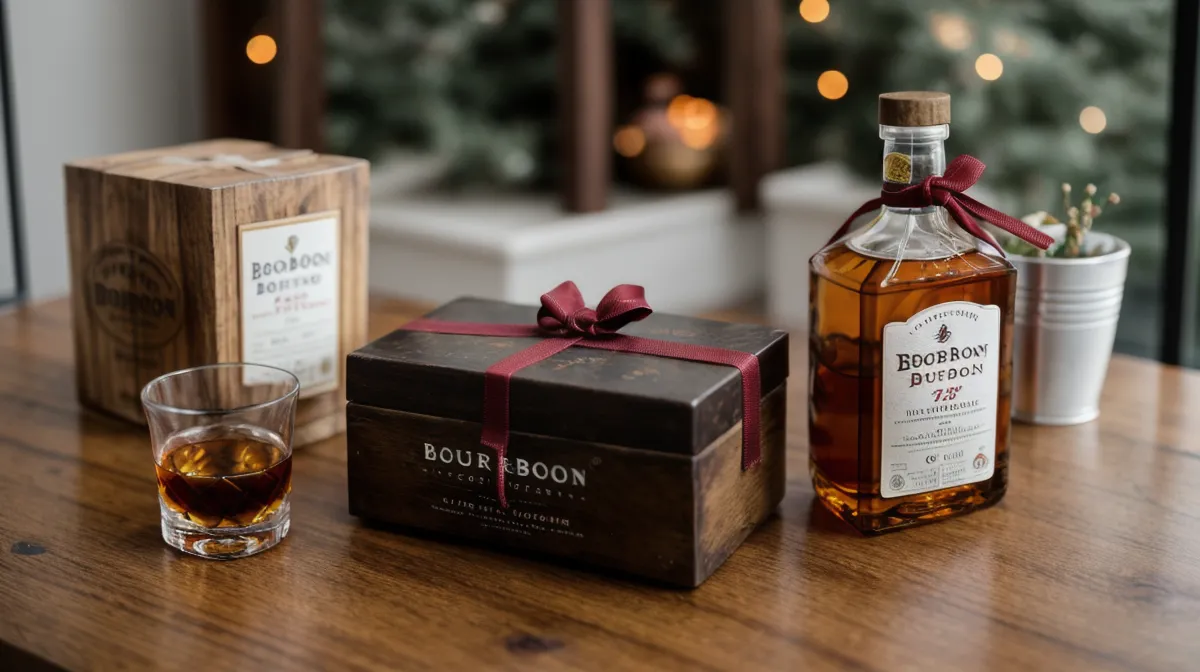
Three days. That was how long it took Sybil Crenshaw, a few blocks over, to text me the name of a bottle after one Tuesday pour — no greeting, no punctuation, just the bottle's name, because she had a dinner party coming up and didn't want to show up with another bottle of red. That's basically the whole appeal of wheated bourbon in one text message: it's the pour nobody has to think twice about.
Most people who swear they don't like whiskey aren't actually rejecting bourbon — they're reacting to the raw burn that hits before any flavor shows up. Logistics work fills most of my day with delayed freight manifests, so by the time I get home I want twenty quiet minutes, not a drink that fights me on the way down. That's the gap wheated bourbon fills, and it's a decent entry point for bourbon beginners who want something to actually finish instead of nurse out of obligation.
The Wheated Bourbon Swap, in Plain Terms
Bourbon has to be majority corn by law, full stop — that's where the baseline sweetness comes from no matter the brand. From there, most bourbon whiskey leans on rye as the second grain, and rye is what gives a pour its peppery snap. Wheated bottles swap that rye for soft wheat instead, and that one substitution is most of the reason they land rounder in the glass.
I don't lean much on tasting-note vocabulary, because half of it means nothing to me, but the pattern showed up on its own over time. Whatever bottle goes empty first off the shelf, bourbon or wine, tells you more about actual smoothness than any back-label blurb does.
A Short List Survived Ten Weeks of Tuesday Pours
By the tenth week of rotating bottles through those Tuesday pours, the shelf had already sorted itself without me forcing it. Three bottles kept reappearing: standard Maker's Mark, W.L. Weller Special Reserve, and Larceny Small Batch, all wheated, all easy enough to find without turning the hunt into a project.
Weller is the one people treat like treasure, because it shares a distillery with bottles that actually are hard to get. Poured neat next to the other two, though, it comes across thin — pleasant green apple and vanilla, gone fast. Hunting it across three different stores, or paying well past retail for it, is hard to justify once you've put it side by side with something that costs less trouble, but if the chase is part of the fun for you, that's your call.
Maker's Mark is the one that never surprises anyone, which is the whole point. Bottled at a steady 90 proof, it gives you warm bread and vanilla without ever asking a guest to brace for it, and nobody's reached for ice to get through a glass of it at my place. Larceny runs a notch higher at 92 proof and leans into butterscotch and roasted nuts — a little more weight in the glass than Weller, with none of the edge.
Not everything that lands on the counter earns its spot, bourbon or otherwise. Noreen, two doors down, brought over a wine last year with the word "approachable" printed right on the front label, which should've been my first warning. I poured it at a Tuesday tasting and it just sat there, barely touched, while everyone kept drifting back toward the bourbon end of the counter. A label promising easy drinking doesn't make anyone actually drink it.
Higher Proof Doesn't Always Mean More Burn
Conventional wisdom says lower proof should go down easier, and most new bourbon drinkers assume an 80-proof bottle is the safer bet over anything stronger. One night out on the NuLu bar strip off East Market, I ran a blind pour between an 80-proof starter whiskey and the 92-proof Larceny, and everyone at the table picked the higher-proof pour as the smoother one — which tells you conventional wisdom doesn't always survive contact with an actual glass.
I won't pretend to know the exact mechanism behind that — that's a question for people who study this for a living, not a logistics guy with a kitchen shelf — but watering a bourbon down clearly costs it something besides alcohol content.
That's really what people mean when they call a bourbon smooth anyway. They're not measuring proof on a chart. They're noticing whether their tongue feels protected or scalded, and wheated bottles tend to win that test more often than high-rye ones do.
Picking What Actually Gets Poured
If you want a bottle you can pour for neighbors without watching anyone wince, skip the frantic hunt for allocated bottles priced like a steakhouse dinner over retail. Grab a standard Maker's Mark or a bottle of Larceny instead — both sit at a reasonable spot on the shelf, both taste closer to dessert than pepper, and neither requires knowing anyone at the liquor store.
Still working through how to sip bourbon neat without getting overwhelmed by the heat? I've got a longer breakdown on the Best Bourbon for Beginners to Sip Neat Without the Burn that walks through building up your palate step by step.
State shipping rules for alcohol are enough of a maze that buying off a local shelf is almost always the easier move anyway, and that goes for bourbon or wine club shipments alike. None of this makes me anything other than a logistics guy who pays attention to his own kitchen counter — not a doctor, not a trade expert — so if alcohol fits into your life in a complicated way, that's a conversation for an actual professional, not a blog about a bourbon shelf. The thing that actually stuck with me isn't wheat versus rye. It's that smooth is something your guests decide with their own glass, not something a label can promise on your behalf.