People ask me whether a can labeled 'non-alcoholic' actually contains zero alcohol, or if that's just what the label wants them to assume. I get some version of that question more than almost anything else readers write in about, usually from someone who used to grab a real beer after work and is now standing in a grocery aisle comparing four cans that all claim to fix the same problem. Non-alcoholic beer has a branding problem and a real regulatory answer sitting underneath it, and Sober Carpenter is the brand that finally made me care enough to go find that answer instead of guessing.
Before you get further into this: several of the bourbon retailers, wine calendars, and non-alcoholic brands mentioned below pay me a commission if you click through and buy something. Your price does not change either way. I am not a doctor, I do not have any medical training, and none of this is meant as guidance for a health decision — if you are changing your drinking habits for health reasons, that conversation belongs with your own doctor, not a guy with a shelf over his kitchen pass-through. Shipping rules for alcohol vary by state too, so check yours before you check out.
My kitchen shelf started as a handful of bottles and turned into something my wife's book club now treats as a resource, which is its own kind of compliment. A wine tasting calendar is usually what gets credit for widening my palate past bourbon, one mini bottle a night instead of committing to a full case of something I might not like. Somewhere in that process I started noticing a re-gift threshold on my own shelf — the point where a bottle either earns a permanent spot or ends up wrapped in tissue paper for somebody else's holiday party, which is more or less the whole idea behind what this shelf keeps teaching me.
The Zero-Alcohol Myth on Every Non-Alcoholic Beer Label
Here's the part almost nobody has right, including me for longer than I want to admit: 'non-alcoholic' does not mean zero alcohol. In the United States the federal cutoff for that label is below zero point five percent alcohol by volume — anything at or above that has to register with the TTB and carry the same government health warning a regular beer does. Non-alcoholic beer is a legal category with a number attached to it, not a promise that the can is chemically identical to sparkling water. That same state-by-state patchwork shows up again anytime someone asks me about ordering bourbon or wine across state lines, and it turns out beer is just as inconsistent. Once I understood the actual cutoff, the "how do they make it taste like that" question made a lot more sense, because these breweries are aiming to land just under a regulatory line, not at zero.
When My Dry Month Only Lasted Eleven Days
A few years before Sober Carpenter ever showed up on my shelf, I tried the other approach: cut alcohol out entirely for a month and just drink sparkling water instead. I made it eleven days. It wasn't the lack of a buzz that got me, it was the lack of ritual — no glass to pour, no head to admire, nothing to hold while everyone else at the Tuesday table had something in their hand. Sparkling water solved the wrong problem. What I actually wanted was the beer-shaped part of the evening, not just less alcohol in my system.
The non-alcoholic beers on shelves back then did not help my case either. Most of what I could find locally tasted thin and slightly metallic, more like a beer-flavored seltzer than an actual pour, so I filed the whole category under "not worth it" and went back to bourbon. It took a reader named Wade Ingold writing in about non-alcoholic options — he had been cutting back for a few months and wanted something to bring to barbecues that did not feel like a consolation prize — to get me looking at the category again instead of assuming the cardboard-tasting stuff was as good as it would ever get.
What Sober Carpenter Gets Right After Work
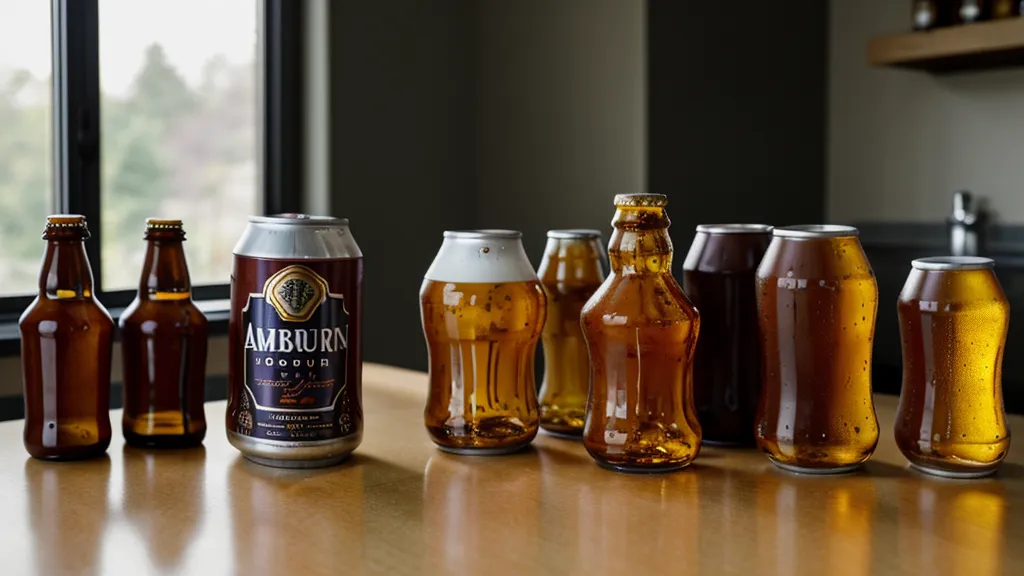
That first can of Sober Carpenter I opened was an Irish Red, cracked open at the island without any announcement to the table. The pour had a real head that held its shape instead of collapsing like soda foam, and the aroma had that toasted, malty pull I associate with an actual pub tap. I wasn't trying to find a substitute for anything — I just wanted something that fit the regular Tuesday rotation without anyone having to make a thing out of it, which turned out to be the right way to think about the whole category instead of treating it like a consolation prize.
There's a burn you get at the back of your throat from a young, high-rye bourbon that's only been open a week or so — a rasp that tells you exactly what you're drinking before you've swallowed. The Irish Red doesn't have that, obviously, but it has enough weight behind it that your brain doesn't file it as a soft drink either, which is the gap most of the bad ones never close. It's a different kind of hunt than what I go through when I want an allocated bottle nobody local carries — that search is its own project, and it's most of why Bourbon Concierge ended up bookmarked, since finding real allocation access without driving to three counties is a separate skill from finding a good NA beer entirely.
If the hop-forward side of that lineup interests you more than a red ale does, I went deeper on their low-calorie IPA in a separate piece, since that one deserves more room than a single paragraph here.
Passing the Test Near Whiskey Row
Blaine Musgrove, who I know from a rec-league softball team and who never really stopped showing up once the games ended, is the one who put this to the real test. We were downtown near Old Forester Distillery on Whiskey Row waiting on a delivery pickup, both of us tired and ready for something cold, when I handed him a Blonde Ale instead of asking first. He finished it, read the label, and asked since when I started buying imports. He had no idea it wasn't real beer, and he's usually the one at the table who orders the thing nobody else has heard of, so that reaction meant more coming from him than it would have from someone easier to fool.
That was around the same time I caught myself reaching for a second can without doing the mental math I usually do with a bourbon pour — no quick check on whether I'd already had enough for a Tuesday, just opening another one without even glancing at what it cost me. That's a strange thing to notice about a beverage with no alcohol in it, but it told me the ritual was intact even if the effect wasn't. Wade still sends me notes now and then about whatever he's tried since that first email, which is its own small proof that the category holds up past a first can.
Something similar happened with the In Good Taste Wines calendar, twenty-four mini bottles that taught me I like French reds more than I expected, in doses small enough that a rough pour didn't cost me a whole bottle's worth of regret. It's also where I started paying attention to things like whether a red needed to sit open for a while before it tasted right — the decant decision matters more for some reds than people assume — and to what tannin actually feels like on your tongue rather than just what a label claims about it. Bourbon drinkers crossing over into wine tend to gravitate toward the same structure they already like in a glass of rye, and reading an actual wine label without help is its own small skill nobody teaches you before you're standing in the aisle holding one. Not every bottle from that calendar earned a permanent spot — a gift-basket Malbec from a coworker one Christmas didn't make it past its first Tuesday, and that's fine, it happens.
Sorting Out Which Style Earns a Spot
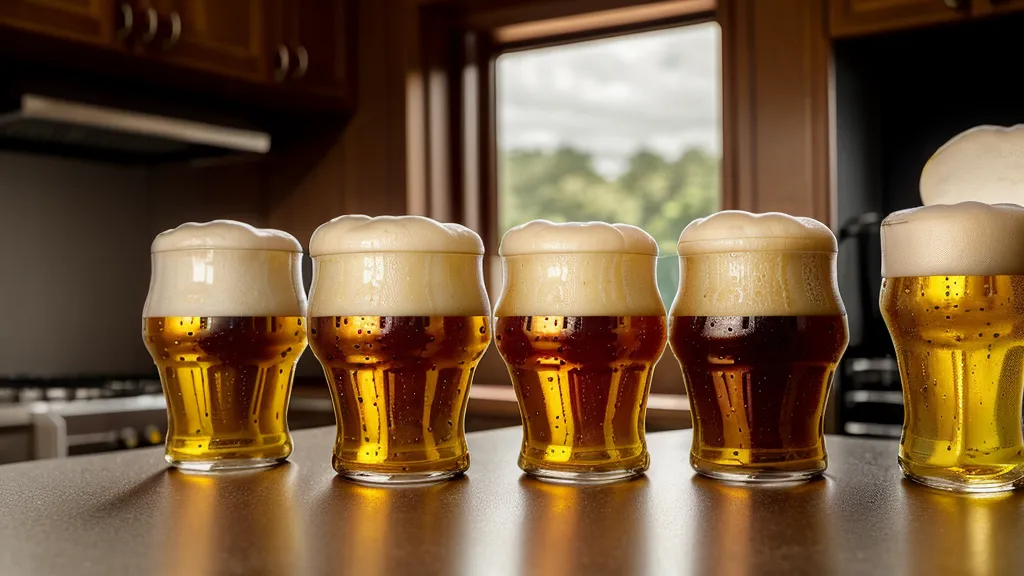
After enough Tuesdays with all four styles in rotation, they sort themselves out pretty clearly. The Irish Red is the crowd-pleaser, with enough caramel character that it plays well for anyone who already likes what a mid-shelf bourbon brings to a pour, which is its own rabbit hole if you're trying to figure out where your money is actually going on a bourbon shelf. The Blonde Ale is the safe bet, the one I hand to somebody who just wants "a beer" without further discussion. The White Wheat is crisp with an orange-peel edge that works best on a Saturday afternoon, and the IPA is the one that divides the table — if you don't like bitter, skip it, but if you miss a piney West Coast pour, it lands. None of this is that different from figuring out where bourbon ends and rye starts, which trips up more beginners than the flavor difference should. It's the same logic behind deciding what order to pour a flight in, so an earlier glass doesn't wreck your palate for the next one.
For something more formal — a retirement gift, a milestone, a niece's wedding — I'd still point people toward the custom-etched bottles at Mano's Wine before I'd point them toward a case of beer, non-alcoholic or otherwise. It reads as more personal than a generic Wine Country Gift Baskets box mailed to a coworker you don't know well enough to pick something specific for, though the baskets still do their job when you need something to just show up looking right.
So Is Non-Alcoholic Beer Actually Worth It?
I haven't given up my bourbon, and I'm not about to pretend this swaps out for a good pour on a cold night. I still keep a few bourbon gift sets around for when family visits, and that's not changing anytime soon. What changed is having a real option for the nights when waking up clear-headed matters more than the ritual of something stronger, and not having to reach for flavored seltzer to get it.
So here's the actual answer to the question I opened with: no, 'non-alcoholic' doesn't mean zero alcohol, it means under half a percent by law, and that's worth checking on the can if it matters to you. And no, it doesn't have to taste like cardboard either — that reputation is a few years out of date, and it's mostly earned by brands that strip alcohol out of a finished beer instead of brewing for flavor in the first place. If you want to see where the difference actually shows up in a glass, the Sober Carpenter lineup is where I'd start looking, and your call on which style fits your Tuesday.