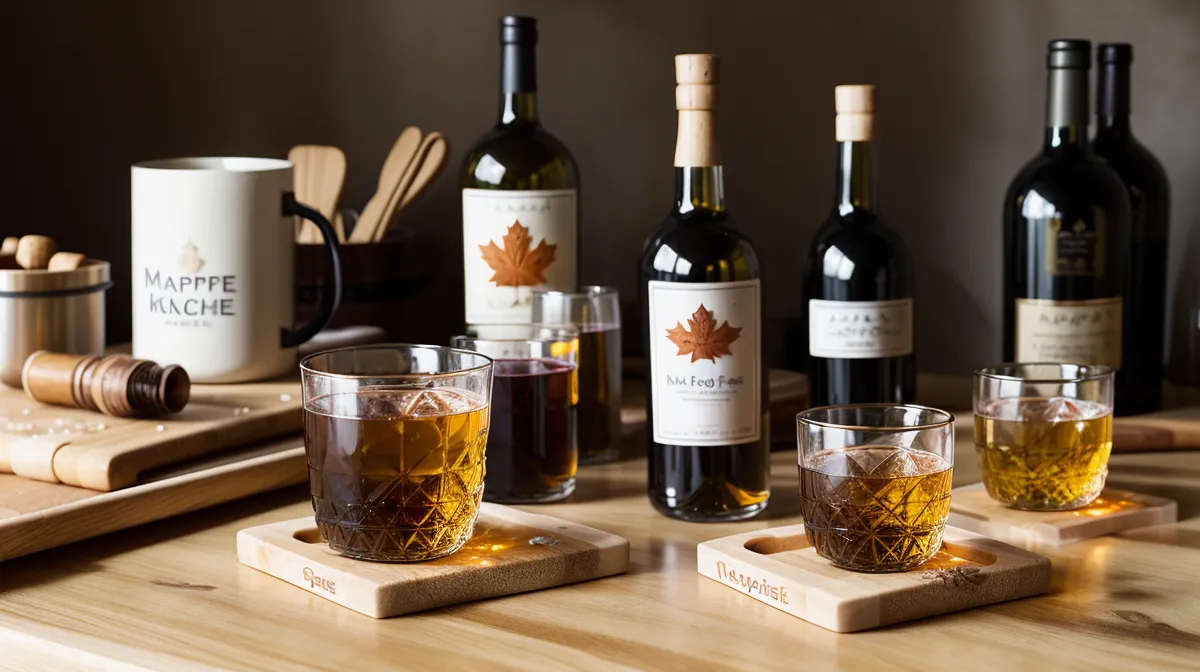
I'm sliding a barely-touched cabernet to the back of the pass-through shelf, past the row that grew from three bottles in 2018 to fourteen now, and it hits me that non-alcoholic beer takes up more fridge space these days than the wine ever has. Eight years of Tuesday bourbon tasting nights on this Louisville shelf turned wine discovery into its own habit right alongside it, and by now the question of whether a bottle stays or gets passed along has a pretty blunt answer.
None of what follows comes from any kind of certification — I'm a project manager who pays attention to what's actually in the glass, not a sommelier or a distiller. A few of the shops and non-alcoholic brands mentioned below send a small commission my way when someone orders through a link, and that never changes what you pay. If a bottle didn't survive a Tuesday, I'll say so plainly instead of padding the shelf with praise. Check your own state's direct-shipping rules before you order anything, since they're not the same everywhere, and drink at whatever pace actually works for you.
Fourteen Bottles, One Ledge
The pass-through started as a single local bottle of bourbon in late 2018, propped on the ledge between the kitchen and the living room in Louisville, mostly because I had nowhere else to put it. Most of what actually gets poured on a given Tuesday isn't the rare stuff at all — it's closer to what I'd call mid-shelf value, a bottle priced for an ordinary weeknight that still tastes like somebody thought about it, and that's a whole separate conversation I won't get into here. Eight years in, the shelf holds fourteen bottles instead of one, and the harder skill turned out to be figuring out which ones earn the spot, not finding new ones to fill it.
Chasing Allocations Out of State
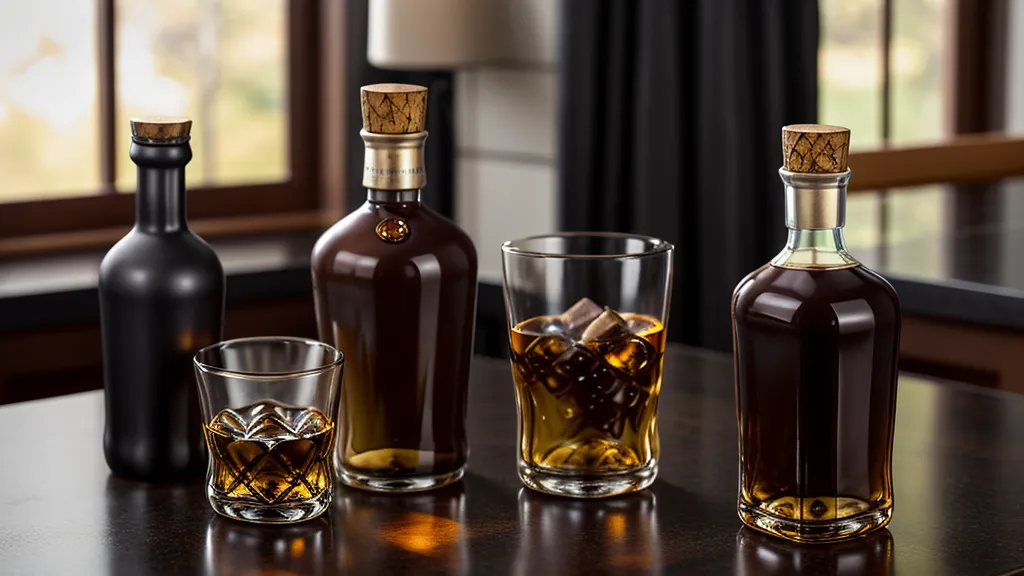
Living in bourbon country doesn't make the rare stuff easier to find — if anything, the local competition for it is worse, because everyone here already knows what they're looking for. Bourbon Concierge is a small D.C. shop that actually answers the phone when I describe the gap I'm trying to fill on the shelf, whether that's a quiet weeknight pour or something for an occasion. Getting any real access to allocated bottles from a Kentucky address is its own puzzle, and I've laid out the longer version of that separately in how to buy hard to find bourbon online. My buddy Gareth Kinlaw was on the phone with me the last time I placed an order there, needling me the whole call about paying anniversary-dinner money for a label just because it's hard to find — he's skeptical of anything priced on hype rather than what's actually in the bottle, and he wasn't wrong, because I'd described the bottle so vaguely that what showed up was a different expression entirely. That one's on me, not the shop; I ask for the exact name now, not "something like the one that sold out last spring."
For anyone wondering what actually makes something "bourbon" instead of just brown liquor in a fancy bottle: under the federal standards of identity in 27 CFR Part 5, it has to be distilled from a mash of at least 51 percent corn, come off the still at no more than 160 proof, go into new charred oak at no more than 125 proof, and be both distilled and aged inside the United States to carry the name at all. That's also roughly where bourbon and rye split — the two get compared constantly, and the actual mash-bill distinction between them is a bigger topic than I've got room for here.
Where Does Non-Alcoholic Beer Actually Earn a Spot on Tuesdays?
The Tuesday group has been meeting since 2019, and the lineup used to be bourbon start to finish. About a year ago, one regular started quietly asking whether I could keep something non-alcoholic in the fridge — no announcement, no big conversation, just a standing request that became part of the routine. Sober Carpenter ended up solving that better than I expected; their Irish Red actually reads like a real beer in the glass, malty and toasted, instead of the sugary stand-ins from the grocery store. The mixed packs make it easy to rotate a different can into the lineup depending on who's actually at the table that week, which turns out to be its own small skill once you've hosted enough of these nights. It's become a fixture of the shelf over the kitchen pass-through now, sitting right next to the bourbon instead of off to the side.
Fenton Burley is the one who made that switch, and he's turned out to be pricklier about non-alcoholic options than anyone else at the table, which is useful even when it's annoying. I handed him an IPA can first the week I met him halfway, forgetting he leans away from anything hoppy, and watched him nurse it for two hours out of politeness instead of actually drinking it. Lesson noted — the Blonde Ale goes in front of him now, and he still tells me straight when a mixed pack misses.
Wine Discovery Without Faking the Label
My wife's book club is the reason there's wine on the shelf at all — they kept bringing bottles I'd never heard of, and I got tired of nodding along without knowing what anyone meant. I still don't know what tannin structure is technically supposed to taste like, but I can tell a bottle that dries out my mouth from one that doesn't, and that's about as far as I'll take it in this piece. Reading a label well enough to guess what's actually inside took longer than I want to admit, and it's a skill worth its own writeup rather than a paragraph here.
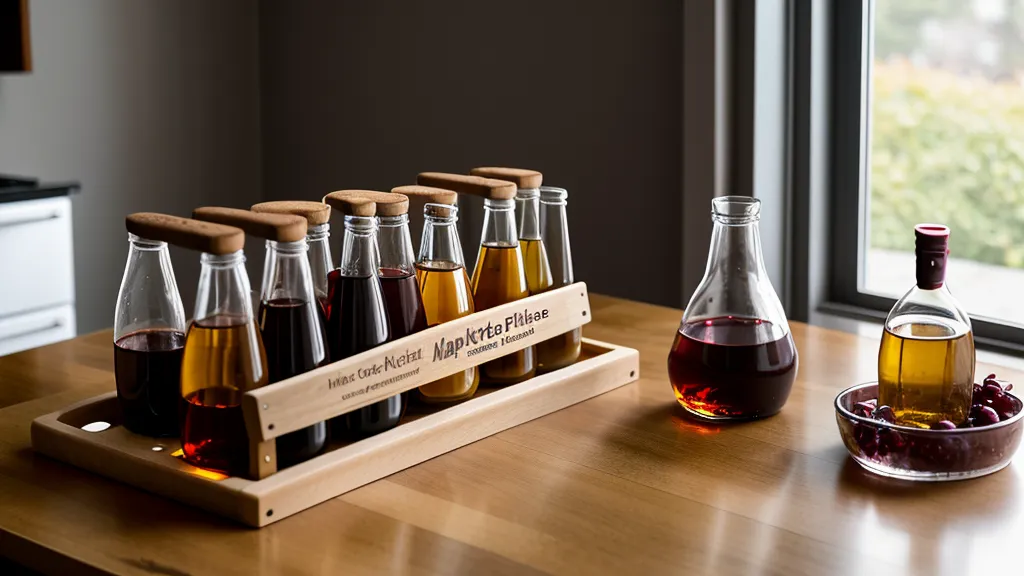
An In Good Taste Wines tasting set solved the guessing-game problem better than another random bottle off the shelf would have — it's an advent-style box of two dozen mini bottles, low-commitment enough that I figured out I like Argentine reds more than the heavy French stuff without committing to a case of either. The little bottles fit right on the pass-through ledge, and the cards explain what you're smelling without making you feel like you failed a quiz. Whether to decant something before people arrive is a call I make bottle by bottle rather than a fixed rule, and that's its own decision tree I won't unpack here. It's a solid way to start organizing a home bar when there's no real cellar space to work with.
One Tuesday I described a red as tasting like a damp basement, fully confident in the read — Gareth said cherry cough drops, someone else said pencil shavings, and the tasting block-8137c7 that came with it agreed with none of us. Nobody at the table matched my note, not even, as it turned out, the people who wrote the card. I've stopped treating my first read as gospel since.
The Re-Gift Threshold
Here's the actual rule I use, since "do I like it" turns out to be the wrong question: a bottle stays if it's still getting poured a second time before anyone's reached for the cheese plate. If it sits open after the first round while people reach for something else instead, it's already been sorted, whether I admit it that night or not. That's the whole test — not rarity, not what it cost, not how the label looks on the ledge under the pendant light. It sounds obvious written down, but it took longer than I'd like to stop confusing "impressive" with "wanted."
A coworker sent over a gift basket last month as a thank-you for pulling together a big logistics contract, and it came from Wine Country Gift Baskets. Credit where due — it looked exactly like the listing photo, which is rarer than it should be in this category. The cheese and crackers disappeared on a rainy Sunday, but the Malbec inside never cleared the threshold above; I left it open without decanting, told myself I'd finish it over the weekend, and by day two it had turned enough that even a batch of sangria couldn't fully hide it. If you're after the best wine and cheese gift baskets, that one's solid for presentation — just don't expect the bottle inside to be the reason you ordered it.
The bigger miss wasn't a single bottle — it was signing up for a wine-of-the-month subscription a while back that kept sending three bottles at a time faster than I could get through them, and I never got around to canceling before the next box showed up. Two rounds of that sat half-finished before I pulled the plug. Not every failed intervention is a bad product; sometimes it's just not managing your own inbox.
Custom Labels, Crossover Reds, and Shipping Rules
My niece got married last month, and I wanted something more personal than a card, so I ordered custom-labeled bottles from Mano's Wine. They hand-etch and hand-paint the bottles, and for roughly the price of a decent mid-shelf bourbon, you get something that looks like art sitting on a gift table. The wine inside was the supporting act — fine for a toast, nothing more — but the label was clearly the point. Give them real lead time; hand-etching isn't a same-week turnaround.
There's a real pattern in which red wines a bourbon drinker actually reaches for once they cross over, but that's a longer list than fits in this piece. Shipping rules also shift by state and by retailer in ways that deserve their own side-by-side rather than a mention here. Same with the order you pour a flight in — it changes what people notice more than most hosts expect, and that's worth its own walkthrough too.
What Eight Years Actually Sorted Out
If you're starting a shelf of your own, don't wait until you feel like an expert to start editing it down. A working shelf usually needs some mix of a high-end pour for when the occasion calls for it — Bourbon Concierge is where I go for that — a discovery set like In Good Taste for when you're still figuring out what you like, and something reliable and non-alcoholic like Sober Carpenter for whoever at the table is easing off that night without making it a thing.
Walk through Paristown Pointe on a Saturday and you'll pass at least two shops selling some version of what's on my ledge, which tells you the demand around here isn't going anywhere. There's a faint oak-and-char smell that lingers near the pass-through after a full Saturday session, long after the glasses are back in the cabinet, and that's usually the closest thing I get to proof the night worked. Your call on what earns a spot on your own shelf — mine's just what happened to survive eight years of Tuesdays. If you want help finding the bottle that's actually worth chasing instead of just rare, Bourbon Concierge is the first place I'd point you.