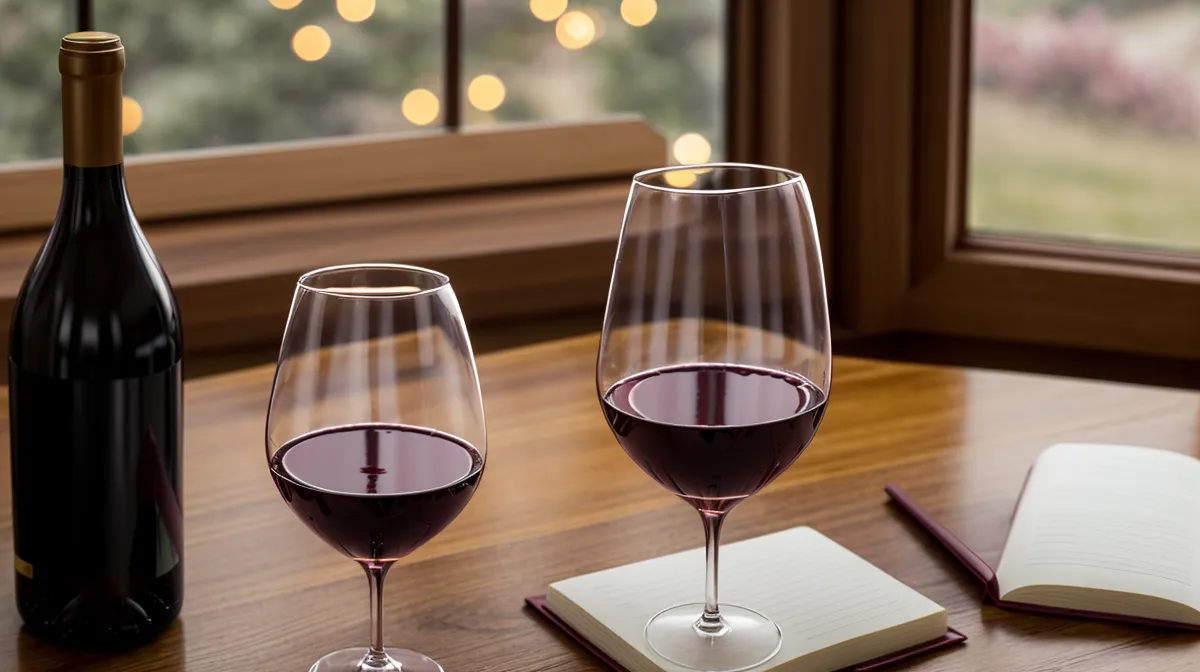
How many wine glasses does a beginner actually need before the extra ones stop helping and just start eating up cabinet space? I picked up a wedge of cheese at Butchertown Market on my way home a while back, and by the time I set the plate out, I'd already poured myself a second glass — same mismatched stem as the first, no varietal-specific bowl anywhere in the kitchen. The wine tasted fine either way, which is exactly the kind of thing that makes you question what the glassware aisle is trying to sell you.
Quick disclosure before we get into it: some of the bourbon shops, wine tasting calendars, and non-alcoholic brands mentioned below are linked with an affiliate arrangement, so I earn a small commission if you order through them, at no extra cost to you. I've run every one of these through an actual Tuesday tasting, not a lab. I manage logistics for a living, not wine, so drink at a reasonable pace, check in with a doctor about anything health-related, and look up your own state's shipping rules before you order — a few states still make that more complicated than it needs to be.
The Myth That More Glasses Means More Expertise
The common idea floating around this hobby is that a serious drinker owns a different glass for every occasion — a Bordeaux bowl, a Burgundy balloon, a flute for the sparkling stuff, a tulip for the whites. That's mostly marketing dressed up as expertise, and I fell for a version of it myself. I already know what a Glencairn does for the rare allocations from Bourbon Concierge that never show up at a regular Louisville liquor store — I won't rehash the whole bourbon-versus-rye argument here, that's a different fight entirely — but the same instinct followed me into wine, and it steered me wrong. Wine does need room to open up and breathe, but that doesn't mean a cabinet full of shapes. It means one glass that handles a standard 750 milliliters bottle of red or white without you having to think about which shelf to reach for.

Why a Universal Glass Beats a Cabinet Full of Varietals
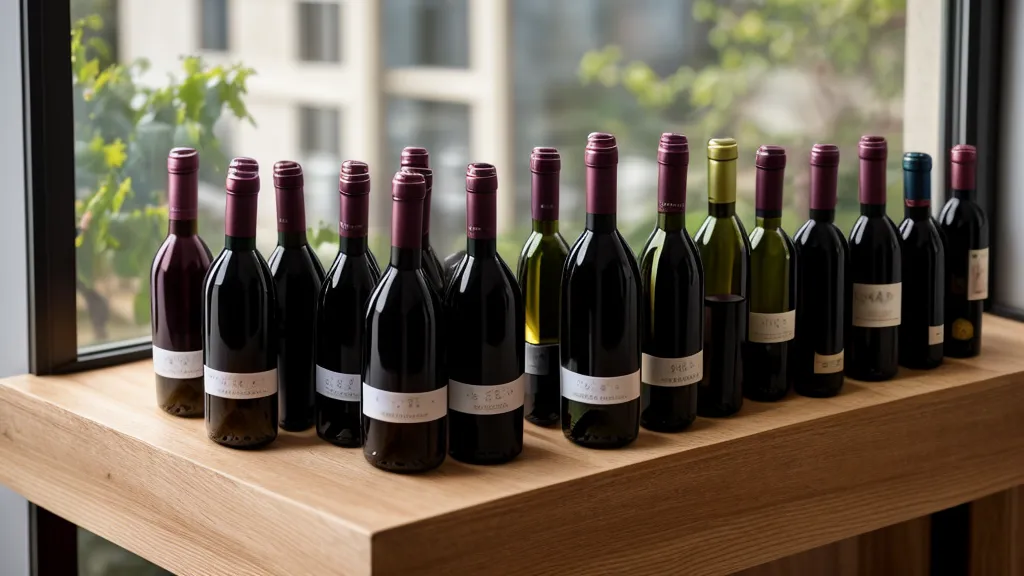
A universal glass sits in the middle — narrower than a red wine bowl, wider than a flute, tapered enough at the top to hold aroma in without funneling it up your nose like a shot glass. It's a compromise, and for a beginner, compromise wins. Working through two dozen mini bottles from In Good Taste Wines made that obvious fast: the crisp whites came across cleaner in the narrower pour, the heavier reds needed the wider bowl, but the same universal stem handled both well enough that I never once wished for a rack of specialty glasses. There's a whole separate logic to what order you taste things in during a flight like that, whites before reds, light before heavy, but that's a conversation for another article — the glass shape matters before you even get to sequencing. It's not a perfect match for a high tannin red wine the way a dedicated Bordeaux glass would be, and if you want the full rundown on why some reds hit the tongue harder than others, that's tannin structure and it's its own rabbit hole — but a universal glass gets you close enough to notice the difference, which is all most people actually need.
I also learned the stemless lesson the hard way. A coworker sent over a Wine Country Gift Baskets box around the holidays, a decent malbec and a wedge of cheese that traveled better than the wine did. Poured into a stemless glass, that malbec didn't survive past the one Tuesday I opened it — inside ten minutes my hand heat had warmed it up enough that it tasted flat, almost soda-adjacent. For whites especially, the stem keeps your palm off the bowl and the wine closer to a decent serving temperature. If you're rethinking the whole setup, practical ideas for how to organize a home bar are worth a look before you buy another glass you don't have room for.
What Actually Happens at a Tuesday Tasting
Gareth usually shows up first, and he's the one who keeps a running spreadsheet of every bottle we've opened, updated the same night, which the rest of us have given up trying to match. Fenton's hospital schedule doesn't always cooperate with a Tuesday, and when he does make it, he's just as likely to reach for a Sober Carpenter can as a glass of red — their White Wheat has become a default in the rotation. Once you've got more than one person swapping in and out of alcohol depending on the week, rotating a non-alcoholic option into the lineup becomes its own small project: what stays cold, what gets poured first, what nobody actually finishes. We ran a 5-ounce pour of red through the universal glasses one week against the oversized bowls a neighbor brought over, and the universal glass won — the oversized ones let too much of the smell escape before it ever reached your nose.
That same night somebody opened a bottle from Mano's Wine, the kind with a custom label, a retirement gift with somebody's face etched onto it, not exactly subtle. Reading a label well enough to know what's actually in the bottle is a separate skill from picking the glass, and a custom label doesn't tell you a thing about what's inside it. Even with a bottle that novel, having a decent glass under it made the whole thing feel more like a real pour and less like a gag gift. It's the same crossover I keep running into: bourbon guys ending up buying wine glasses because somebody at the table brought something they'd never seen before, and the glass is what makes it feel worth paying attention to.
Learning to Say No to the Extra Bottle
Before Sober Carpenter became the default, I picked up a different non-alcoholic spirit on a whim, and it smelled like a hardware store shelf the second I cracked the cap — that bottle didn't make it to a second Tuesday, let alone a re-pour. Same shelf, different lesson: I tried a set of "shatterproof" plastic wine glasses once, and they crossed the line from keeper to re-gift so fast I didn't even feel bad handing them off to my brother-in-law for his pool deck. There's a real threshold where a gift stops being useful and starts being something you're quietly rehoming, and cheap glassware finds that line faster than almost anything else in this hobby.
What sits on the shelf now is a set of mid-sized crystal universal glasses, nothing that costs a tank of gas per stem. They handle the allocated bottles that show up in the mail just as well as whatever's on the grocery store end cap, which tells you the glass was never really the limiting factor. Same logic as picking a mid-shelf bottle over the trophy one on top of the display — the middle of the lineup does most of the work for a lot less fuss. Whether to decant a big red before serving it is an argument I have with myself every time one shows up, and I still don't have a settled answer, but a decanter never once fixed a bad glass underneath it. Switching from whatever mismatched stem I'd been using to a proper universal one, I actually started noticing the scents that show up on the label instead of assuming it was marketing filler.
A Home Bar Setup That Fits One Shelf
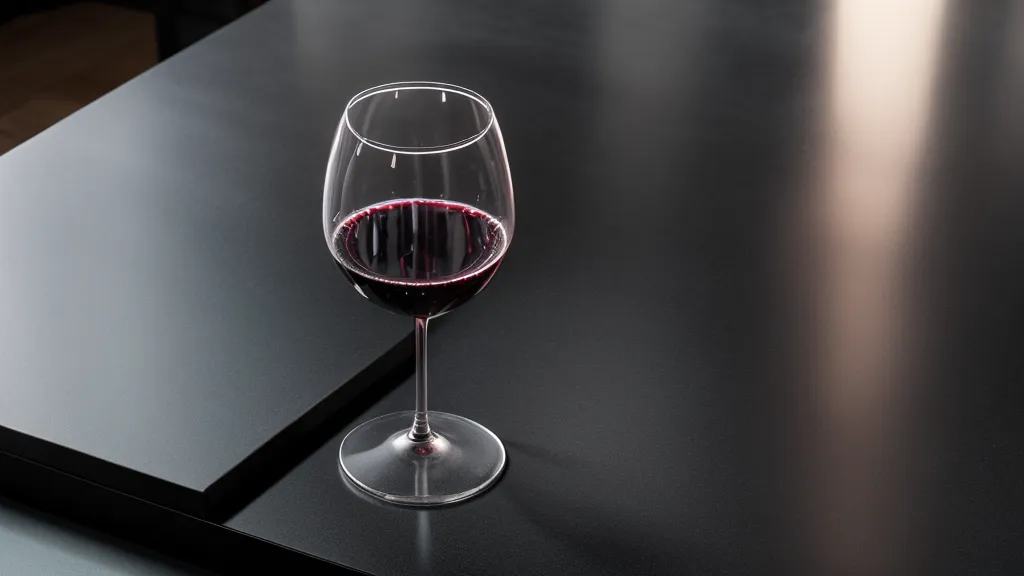
If you're putting together a beginner setup, skip the thick-rimmed stuff first — a heavy rim feels like drinking out of a mug, and a thin one just gets out of the way. Look for a bowl that tapers in slightly at the top instead of staying straight-sided, since that's what traps the aroma instead of letting it drift off before you get your nose in. Budget-wise, a decent set should run about a steakhouse appetizer worth of money, not a mortgage payment, and washing them by hand keeps them from clouding over the way a dishwasher's heat eventually will, even on the ones labeled dishwasher-safe. None of this requires a spreadsheet like Gareth's or a full varietal collection, just a set of universal stems and the willingness to notice what you actually like drinking out of them.
The In Good Taste Wines calendar is still the easiest low-stakes way I've found to figure out what you actually like before committing to a full case — two dozen mini bottles, a decent spread of regions, no pressure to finish something you didn't love. Grab that, grab one set of universal glasses, and skip the varietal cabinet until you've got an actual reason for it. A budget bottle in the right glass will flat-out out-drink a pricier one poured into the wrong glass, and that's money better spent on what's in the glass than on the glass itself. Your call, though — I don't know what to tell you if you'd still rather buy six kinds of stems for a Tuesday night with three people in the kitchen.