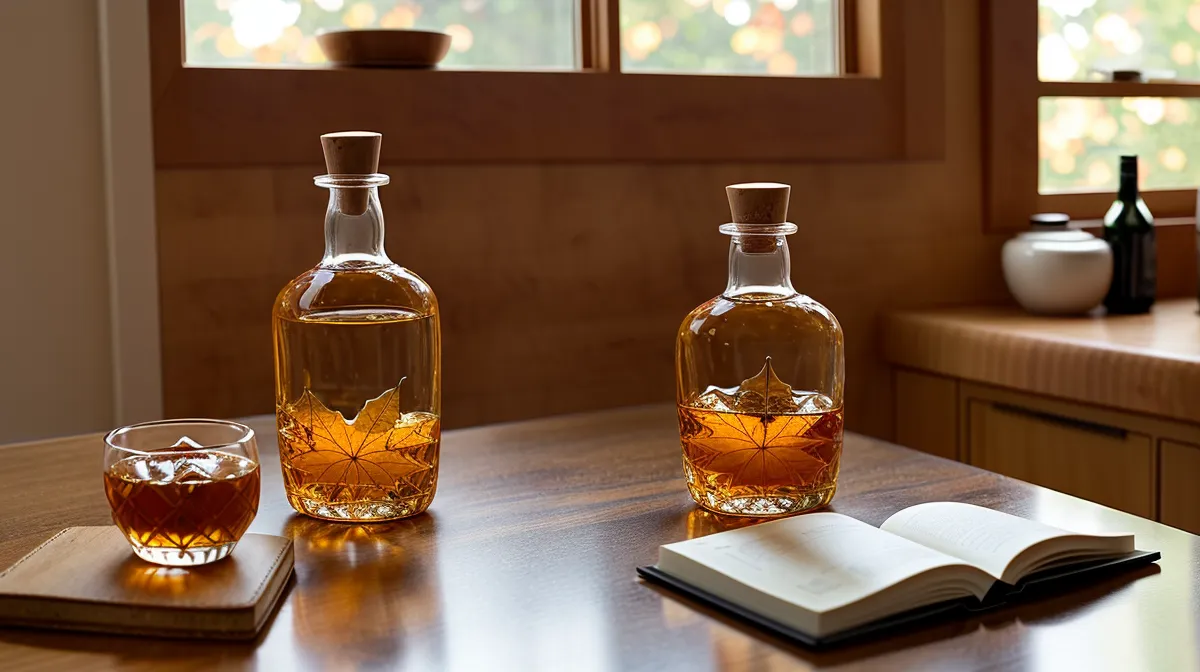
One rainy Tuesday last November, a neighbor of mine winced so hard after a sip of my favorite high-proof rye that I thought he’d bit into a lemon. We were standing by the kitchen pass-through—the place where my bourbon collection has slowly staged a coup over the last few years—and it reminded me that what I call the ‘Kentucky Hug’ feels more like a ‘Kentucky Punch’ to someone just starting out.
Before we go any further, just a quick heads up. A few of the retailers and brands I mention here, like some of the bourbon shops or those wine tasting calendars my wife’s book club loves, send me a commission if you order through my links. It doesn’t cost you anything extra, and I only talk about what actually ends up on my shelf after my own Tuesday night trials. I’m just a logistics guy from Louisville, not a doctor or a professional taster, so please drink reasonably and talk to a professional if you have health concerns. Also, bourbon shipping laws are a tangled mess; double-check your state’s rules before you get your heart set on a delivery.
The Liquor Store Lottery in Louisville
Even living in the heart of bourbon country, finding a bottle that doesn’t scorch a beginner’s throat is harder than you’d think. You walk into a liquor store looking for something special, and you usually walk out with the same mass-market labels everyone else has because the ‘allocated’ stuff is hidden in the back for people who spend a tank of gas on spirits every week.
By law, Bourbon has to be at least 51% corn and bottled at a minimum of 80 proof. Most people assume that if they want to avoid the burn, they should head straight for that 80-proof bottom shelf. But that’s where I went wrong for years. Often, those lower-proof bottles are younger. They haven't had enough time in the charred oak to mellow out the harshness of the grain. They’re thin, and all you taste is the ethanol. It’s the difference between a cheap steakhouse appetizer and the main course you actually wanted.
The Case for the 'Proof-Down' Method
Here is my contrarian take, and it’s something I only figured out during the holiday rush last year when I was trying to help my brother-in-law find his ‘entry’ bottle. Instead of seeking out low-proof bourbons that often taste like wet cardboard, beginners should actually prioritize high-proof, well-aged expressions.
I know that sounds like telling a student driver to start in a Ferrari, but hear me out. A higher-proof bourbon that has spent six or eight years in the wood has a massive concentration of flavor—vanilla, caramel, and that toasted oak. When you have that much flavor, you can add a few drops of water to your standard 1.5 ounces pour. This allows you to proof the drink down to your perfect, burn-free intensity without losing the soul of the whiskey. You can't add water to an 80-proof bottle without it turning into brown water; you can definitely add it to a 110-proof small batch and find a ‘sweet spot’ that feels like velvet.
I tried this recently with a bottle I picked up through Bourbon Concierge. I had reached out to them because I was tired of the ‘tater’ lines at the local big-box stores. They actually handle the phone for people like me who are trying to fill a specific flavor gap. I told them I needed something for a neighbor who wanted to move past mixing with ginger ale but wasn't ready for the ‘hazmat’ strength stuff yet. They pointed me toward a small-batch allocation that bypassed the local madness entirely.
Finding Your 'Kentucky Hug' Without the Tears
Mid-April, when the weather finally turned and we could sit on the porch without jackets, I poured that allocation for the same neighbor who winced in November. I watched him take a sip. That specific warmth started at the back of his throat and spread to his chest, but his eyes didn't water. He didn't reach for a chaser. He just sat there looking at the glass.
That is the goal. You want to feel the weight of the spirit. I have no idea what a ‘tannin’ is officially supposed to taste like in wine—though I’m learning a bit from the milestone gifts we’ve been seeing lately—but in bourbon, I know what ‘harsh’ feels like. Harsh is a prickly heat on the tip of the tongue. A good beginner pour skips the tongue-prickle and goes straight to a slow-motion glow in the chest.
If you're starting to build your own collection, you might want to look into Practical Ideas for How to Organize a Home Bar for Beginners at Home. I keep my ‘invitation’ bottles—the ones that are easy for guests—right at the front of the pass-through. I save the high-rye, high-burn stuff for the Tuesday night regulars who’ve already had their taste buds scorched by years of Louisville living.
The Logistics of a Better Shelf
Being in logistics, I tend to obsess over how things get from point A to point B. One of the reasons I’ve stuck with Bourbon Concierge is that they understand the ‘rare’ side of the market without the attitude. Getting a boutique shipment that isn't just a rebrand of a mass-produced spirit feels like a win. It’s about the price of a nice anniversary dinner, but that bottle will last through a dozen Tuesday nights.
Not every experiment works, though. I remember a gift-basket Malbec I tried a few weeks ago—part of a thank-you from a coworker. It lasted exactly one Tuesday. It wasn’t bad, but it had this metallic finish that reminded me of pennies. I ended up using the rest for a sauce. It’s okay to admit a bottle didn’t earn its spot on the shelf. In fact, that’s how you learn. I’ve traded away ‘highly rated’ bottles because they were just too hot for me, and I’ve kept ‘cheap’ bottles because they had a cherry note that made the whole kitchen smell like a bakery.
When one of my Tuesday tasting buddies got serious about cutting back on the hard stuff, we even started rotating in Sober Carpenter cans. It helps to have something that actually tastes like a craft beer in the glass when you want the ritual without the proof. It’s all about having options that invite people in.
The Final Thunk
There’s a moment at the end of a quiet weeknight pour that I’ve come to love. It’s the heavy, satisfying ‘thunk’ of the glass stopper sealing the decanter. It signals the end of the day. If you’re just starting out, don’t feel pressured to love the ‘burn’ right away. Bourbon should be a conversation, not a dare.
If you’re looking for that first bottle that won't make you regret the purchase, I’d suggest skipping the grocery store aisle. Take a look at the curated selections at Bourbon Concierge and maybe ask them about their current small-batch allocations. It’s a lot easier than standing in a line at dawn on a Saturday, and you’re much more likely to find something that your neighbors will actually finish. Just remember to check your local shipping laws—and maybe keep a bottle of Sober Carpenter in the fridge for the friends who are taking it easy. Your shelf, your rules.