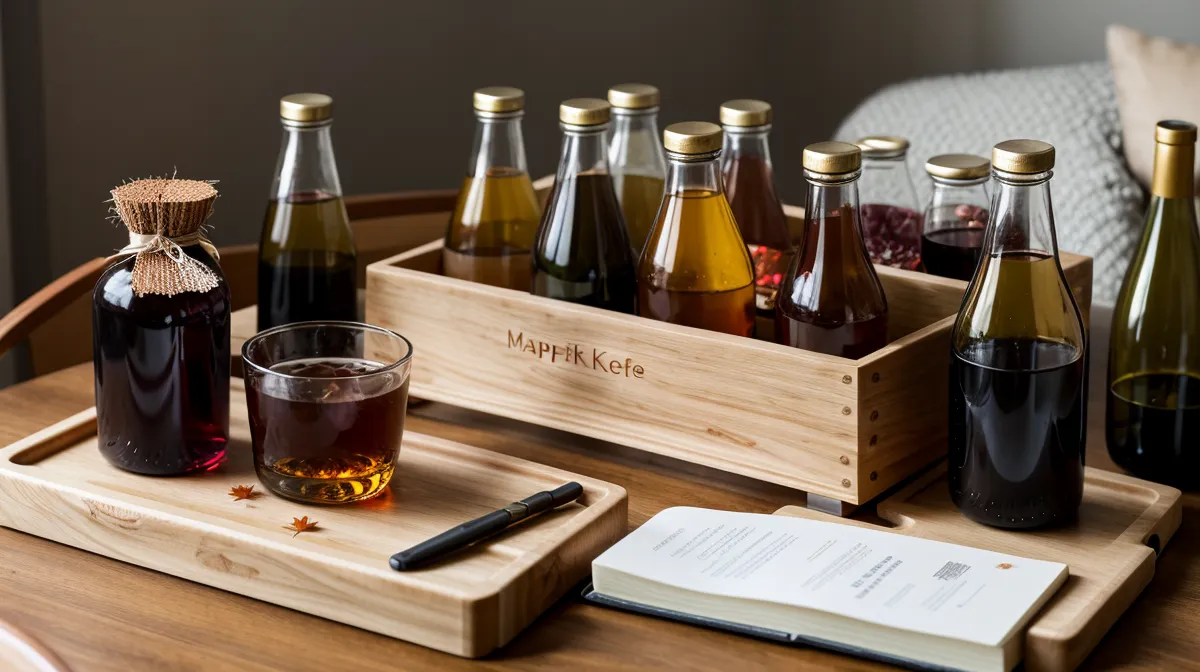
One evening last November, the Ohio River fog had rolled in so thick you couldn’t see the streetlights from my front porch. I was standing by the kitchen pass-through, reorganizing a few bottles of mid-shelf rye, while my wife’s book club sat around the dining table. They were debating a bottle of French red with a label I couldn’t even begin to pronounce. I realized right then that despite spending eight years curating a pretty respectable bourbon shelf, I was the only person in the house who didn’t have a clue what was actually in his wine glass. I knew what I liked—usually something heavy and dark—but I didn't have the vocabulary to explain why. I just knew it tasted like 'wine.'
Before we get too deep into the weeds, I should mention that some of the bourbon shops, wine kit companies, and non-alcoholic brands I talk about here send me a commission if you buy through my links. It’s at no extra cost to you, and every bottle on my shelf was bought with my own regular-person paycheck. I’ve tested these because I was curious, not because someone told me to. I have zero medical training and I’m not a health professional, so please talk to your own doctor if you're looking for health advice or making major changes to your habits. Drink reasonably, and always check your state’s shipping laws because alcohol shipping is a maze that even a logistics PM like me finds frustrating.
Starting Small: The In Good Taste 24-Bottle Discovery
My Tuesday tasting group usually sticks to high-proof pours, but curiosity finally got the better of me. I wanted to learn about wine without committing to a full case of something I might end up using to deglaze a pan. That’s when I found the 24-bottle calendar from In Good Taste Wines. It’s styled like an advent calendar, which felt appropriate since I first cracked it open during the height of the December holidays. Each of the 24 bottles is a 187-milliliter pour—which is exactly one-fourth the volume of a standard 750-milliliter bottle. It’s basically a large glass of wine, which is the perfect amount to figure out if you actually like a region or if you're just being polite.
What I noticed right away was the range. They source from everywhere—Chile, Argentina, Australia, and California. One night I was trying a crisp white from France, and the next, a deep red from the Southern Hemisphere. It turned my kitchen island into a global flight. The best part for a guy like me, who doesn't know a tannin from a tan line, was the tasting cards. They walk you through the scents and flavors without making you feel like you missed a day in sommelier school. I finally put words to that 'fuzzy' feeling on my tongue (tannins, apparently) and that 'bright' zing (acidity). If you've ever read The Shelf Over the Kitchen Pass-Through: Lessons from Eight Years of Louisville Pours, you know I appreciate a bottle that teaches you something while you drink it.
The Trade-Off: Convenience vs. Control
There is a measurable trade-off with these curated kits. They offer a massive amount of convenience—you just open the box and the flight is ready. However, you lose a bit of educational control over the specific flavor profiles. You're drinking what they picked, not necessarily exploring the deep nuances of a single grape variety across different soils. For a beginner, that’s a feature, not a bug. It prevents the 'choice paralysis' I get when I'm staring at the wall of labels at the grocery store. But once you know you love a Malbec, you might find yourself wanting to go deeper than a single mini-bottle allows. It’s about a steakhouse appetizer worth of investment to find out what you actually like, which is a lot cheaper than a tank of gas and a wasted case of wine.
The Tuesday Night Pivot: Non-Alcoholic Options
Late March rolled around, and one of my Tuesday tasting buddies got serious about cutting back. We’ve been drinking high-proof Bourbon for years, but the Wednesday mornings were starting to feel longer than the workdays. He started bringing Sober Carpenter to the rotation. Now, I’ve tried a lot of non-alcoholic stuff that tasted like watered-down soda, but their Blonde Ale actually held its own. It’s legally a non-alcoholic beer because it stays under that 0.5% ABV threshold, but it has the weight of a real craft pour.
I’m not a doctor, and I can't tell you if NA beer is right for your specific health goals, but for our group, it kept the conversation going. We even did a side-by-side with a rare bottle from the Bourbon Concierge. While the bourbon was that rich, allocated pour you can't just find on any shelf in Louisville, the Sober Carpenter gave my friend something to hold in a glass that didn't feel like a 'kid's drink.' If you're looking for more on this transition, I wrote about Finding a Non Alcoholic Beer That Tastes Like Real Beer After Work earlier this year.
Gifts and Custom Labels: When the Wine is the Supporting Act
Sometimes the wine tasting isn't for you—it's for a neighbor's retirement or a niece's wedding. In early May, I had to find a thank-you gift for a coworker who helped me through a massive logistics bottleneck at the warehouse. I ended up looking at Wine Country Gift Baskets. They are the gold standard for 'stuff that actually looks like the picture.' You have to be careful, though. The gift-basket math means you’re paying for the ribbon, the wood crate, and the pink cheese that someone decided pairs well with a Cabernet. I’ll be honest: I once received a gift-basket Malbec that lasted exactly one Tuesday before I realized it was better suited for a pot roast than a wine glass. It’s a crowd-pleaser move, not a 'discover a hidden gem' move.
If you want to get more personal, Mano's Wine is where I go for custom labels. They do hand-etched bottles for NFL or MLB fans, which is big in a sports town like this. The wine inside is fine—it's solid, drinkable stuff—but the label is the headliner. If you’re hosting a tasting and want the bottle to be the conversation piece, this is the route. Just give it about a four-week head start because custom etching isn't an overnight job.
Final Thoughts from the Shelf
After six months of trying these kits and swapping bottles, I’ve realized that being the 'neighborhood expert' isn't about knowing the soil pH of a vineyard in France. It’s about knowing which bottle actually gets finished before the night is over. I still love my bourbon, and I still rely on the Bourbon Concierge when I need an anniversary bottle that feels special, but having a few wine kits under my belt means I'm no longer the guy nodding blankly when the book club talks about 'notes of stone fruit.'
Whether you’re grabbing the In Good Taste calendar to find your new favorite red or stocking some Sober Carpenter for your own Tuesday night group, the goal is the same: pay attention to what's in the glass. You don't need a sommelier pin to know when something tastes like a tank of gas or a steakhouse appetizer. You just need to be willing to try the 187-milliliter pour and see where it takes you. Your call on where to start, but I’d bet on the discovery kits every time.