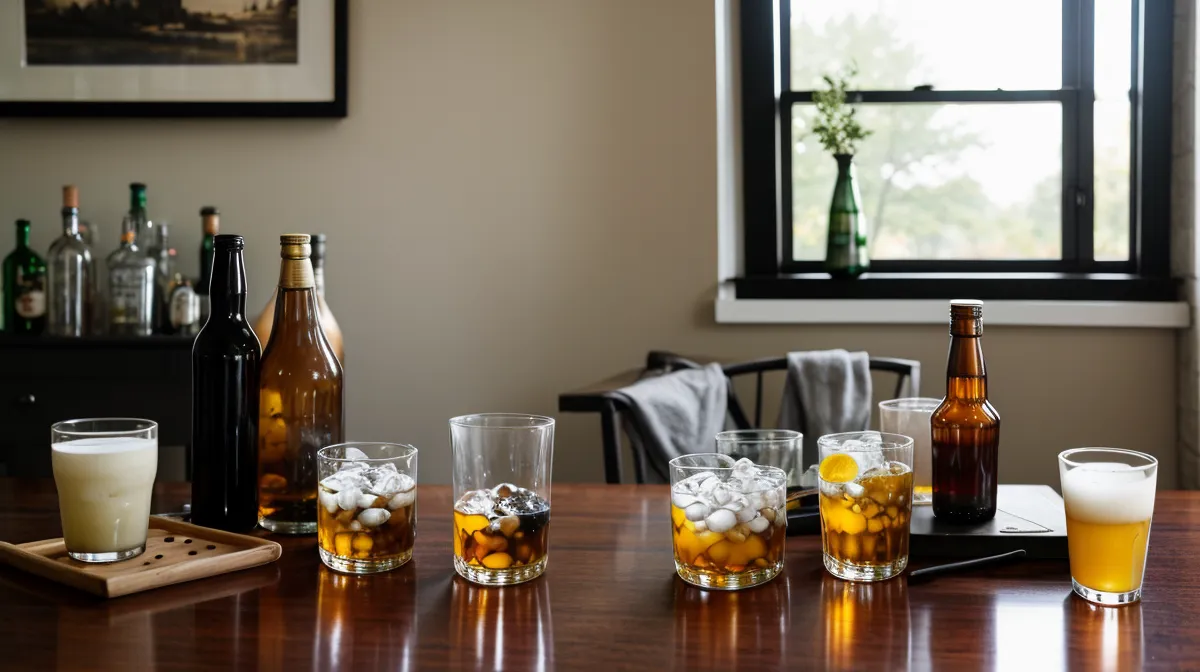
One evening last winter, around early January, I stood in my kitchen trying to find a specific bottle of rye that I knew was somewhere behind a stack of mail, a half-empty bag of pretzels, and the toaster. It was one of those dark, damp Louisville nights where the humidity just seems to seep through the window frames, and all I wanted was a quiet pour to take the edge off a long day of tracking freight delays. Instead, I spent ten minutes playing a high-stakes game of Tetris with glass bottles. When I finally nudged a heavy bottle of bourbon toward the front, I heard that distinctive, hollow 'clink' of heavy glass hitting the granite countertop in the quiet house. It’s a sound that tells you two things: you’re lucky nothing broke, and your collection has officially become clutter.
I’ve been keeping a few bottles on the shelf over our kitchen pass-through since 2018, but over the last eight months or so, things really spiraled. Between my wife’s book club bringing over wines I’d never heard of and my Tuesday tasting buddies introducing me to high-end non-alcoholic options, the pass-through looked less like a home bar and more like a liquor store’s clearance bin. As a project manager, I realized I was failing at the basic logistics of my own home. I didn’t need a mahogany bar with a brass rail; I needed a system that actually worked for the way we live.
The Logistics of the Kitchen Pass-Through
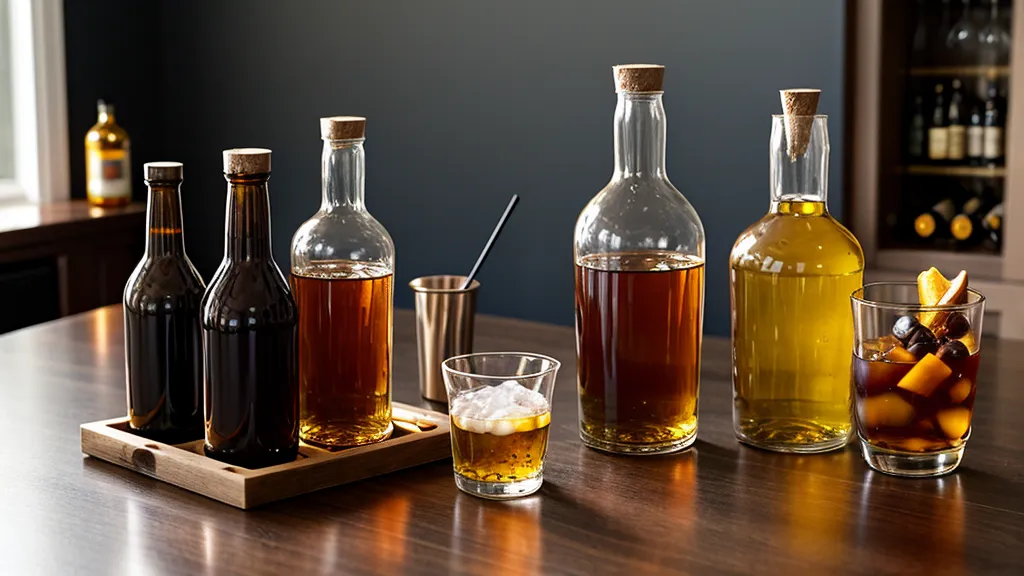
Most people will tell you that the first step to a home bar is buying a dedicated cart or building a walnut cabinet in the basement. I’m going to tell you the opposite: start in your high-traffic kitchen cabinets. There’s a very practical reason for this that has nothing to do with aesthetics and everything to do with usage. If your bottles are tucked away in a formal dining room or a basement man-cave, they become decorative dust-collectors. When they’re in the kitchen, they’re ingredients. I’ve found that having a bottle of dry white wine or a decent bourbon within arm's reach of the stove means I’m much more likely to splash a bit into a pan of mussels or a batch of chili. It keeps the inventory moving.
Applying my logistics background to the kitchen meant looking at "inventory flow." I started categorizing the shelf into what I call the Zone System. Zone one is for the daily drinkers—the stuff that’s reliable but doesn’t require a special occasion. This is where the standard 750ml wine bottles live, along with the mid-shelf bourbons that meet the 51% corn requirement to legally be called bourbon. I’m not a distiller, but I know what I like for a Tuesday night, and it usually involves something that didn’t cost a tank of gas.
Zone two is for "the good stuff" and the bottles I save for when the neighbors come over. Last Thanksgiving, I realized how important this was when I accidentally poured a very expensive, hard-to-find bottle into a batch of hot cider because I couldn't see the label in the back of the cabinet. Now, the special bottles are grouped together, separate from the cooking wine and the mixers. If you're planning on having people over, it helps to have these ready to go; you might even consider how to host a casual bourbon tasting for your neighbors if you find your collection growing faster than you can drink it.
Vertical Space and the Tiered Solution
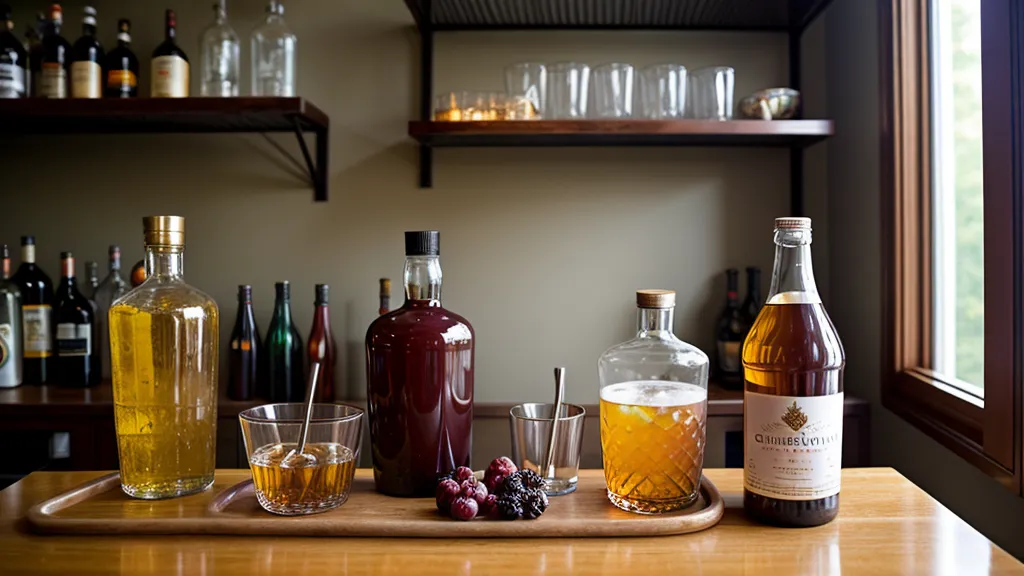
The biggest turning point in my organization journey happened around mid-March. I was tired of reaching over shorter bottles of bitters to grab a tall bottle of vermouth, often knocking things over in the process. I discovered that vertical space is a beginner’s best friend. I picked up a few simple tiered risers—the kind people usually use for spice jars—and it changed everything. Suddenly, I could see the labels of the bottles in the back row without having to move anything in the front.
This is where I hit one of those small embarrassments I mentioned. I spent an afternoon measuring the shelf height for a new cabinet insert I wanted to build, feeling very proud of my precision. But I completely forgot to account for the extra inch added by the decorative bottle stoppers my wife likes to use. I finished the project, tried to slide a bottle of Cabernet in, and it hit the top of the frame with a dull thud. It was a classic PM mistake: I measured the product but ignored the packaging. Now, I always leave at least two inches of clearance above the tallest bottle.
Speaking of tall bottles, wine storage has its own set of rules that I’m still learning. My wife’s book club friends are big on natural corks, and I’ve learned that those 750ml bottles should ideally be stored horizontally. It keeps the cork moist so it doesn't dry out and let air in, which would ruin the wine. For my bourbons, though, they stay upright. Bourbon is sturdy stuff—it’s aged in new, charred oak containers and often comes in at 100 proof if it’s Bottled-in-Bond, so it can handle sitting on a shelf for a while without much fuss. Just keep it out of the direct Kentucky sun that hits the kitchen window in the late afternoon.
Managing the Non-Alcoholic Rotation
One thing that’s changed on my shelf recently is the inclusion of non-alcoholic options. One of my Tuesday tasting buddies got serious about cutting back earlier this year, so I started keeping things like Sober Carpenter in the rotation. It’s been a learning curve. Unlike a high-proof bourbon that can sit on a shelf for years, NA beers have a much shorter shelf life. They don't have the preservative power of alcohol, so you can't just tuck them in the back and forget about them. I’ve had to treat that section of the bar more like a grocery item—buy what you’ll drink in a few weeks and keep it toward the front.
I’ve also had to make room for the tools of the trade. You don’t need a lot, but a standard 28 oz Boston shaker is worth its weight in gold when you're trying to mix something for a group. I keep mine right next to the glasses so I’m not hunting through the junk drawer for a strainer when someone asks for a cocktail. It’s all about reducing the friction between wanting a drink and having one in your hand. If you’re looking for something lighter to keep on hand, I’ve found that having a low calorie non alcoholic IPA for craft beer drinkers who care is a great way to be a good host without over-serving everyone.
I’m not a sommelier or a professional organizer, and I certainly don't have a perfect record. There was a gift-basket Malbec that showed up after a wedding this past spring that lasted exactly one Tuesday before I realized it just wasn't for me—it tasted a bit like a wet basement, if I'm being honest. I ended up pouring it out rather than letting it take up valuable real estate on my shelf. Part of being a beginner is realizing you don't have to keep every bottle you're given. Your home bar should reflect what you and your neighbors actually enjoy drinking.
Today, my kitchen pass-through isn't a museum. It doesn't look like a magazine spread, and there’s still the occasional stray mailer that finds its way near the rye. But I can find what I need in the dark. I know where the 100-proof bourbon is, I know which wine needs to be opened for dinner, and I can grab a cold NA beer without moving a single other bottle. If you're just starting out, don't overthink the furniture. Just look at your kitchen, figure out your zones, and remember to measure twice—including the stoppers. If you find yourself wanting to expand your collection but don't want to pay the local liquor store premiums, you might look into how to buy hard to find bourbon online without the local markup to keep your newly organized shelves stocked. Just remember, I’m not a professional, so check your local shipping laws and maybe talk to a pro if you're planning a massive cellar. For the rest of us, a clean shelf and a good glass are plenty.